

















It’s a big week for sport. Later today (Thursday) you’ll find me on the riverbank at Henley, cheering on the crews of the Reading University Boat Club. It has been one of the finest years in the club’s history, and the Royal Regatta is the perfect stage to celebrate it. If you’re heading down too, do give our rowers a wave.
This is a great time of year for sport lovers, and I happily admit to being one. The football this summer, with all the action over in North America, has me especially excited, although as you might have guessed from my name, neither England nor Scotland is my top team.
I grew up in the Netherlands, not that far from the Ajax stadium, and I have been lucky enough to see some of the finest players the game has ever produced: Cruyff, Neeskens, Van Basten. So forgive me if I’m in mourning this week as the men in orange have sadly been knocked out of the tournament.
Whatever your team, sport gives us so much. The obvious things first: it is great fun, keeps us healthy, teaches teamwork, and it shows young people what it means to work patiently towards a goal.
Those lessons matter enormously, and we are proud to support sport for all our students, as well as for the thousands of local residents who use our sports facilities across Reading every year.
But sport does something less obvious, too. It can help us look at the biggest questions in a fresh way.
That is the thinking behind a project our climate scientists have launched this summer, called The Real Scoreline. Using the football as a hook, they have ranked all 48 competing nations not on goals scored, but on how they are responding to climate change, measuring emissions, fossil fuel dependence, heat stress and more, then turning the results into a series of shareable info cards, each marked with our famous climate stripes.
The standings make for interesting reading. Paraguay tops the table. England and Scotland do respectably well. My own Netherlands sits comfortably mid-table. And some of the wealthiest, most powerful nations find themselves near the bottom. It’s a reminder that whatever our background, and wherever we are from, we can always do more to change our actions, and support others to fight climate change.
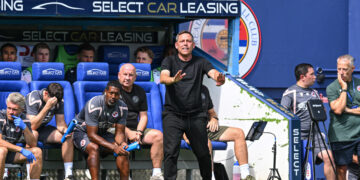
This follows the superb example of Reading FC’s efforts to highlight the reality of climate change by wearing the climate stripes graphic on their sleeves. Of course, the focus of sport is on the action, not on wider issues. But in all parts of our life, we cannot switch off to the big problems that exist. As my colleague Professor Hannah Cloke puts it, if fans start chatting about The Real Scoreline this summer in the pub, at home, or at work, that’s a result worth having. Climate change can feel distant and overwhelming. A pack of cards and some national pride, plus competition and curiosity, is a gentle way in.
You can download the cards yourself at rdg.ac/therealscoreline. Whether you’re rowing at Henley, glued to the football, tied to the tennis, or simply enjoying the sunshine, I hope sport brings you as much joy this month as it brings me and Reading’s students.
Now, where’s my hat? I have a regatta to get to…
By University of Reading Vice Chancellor, Robert Van de Noort