












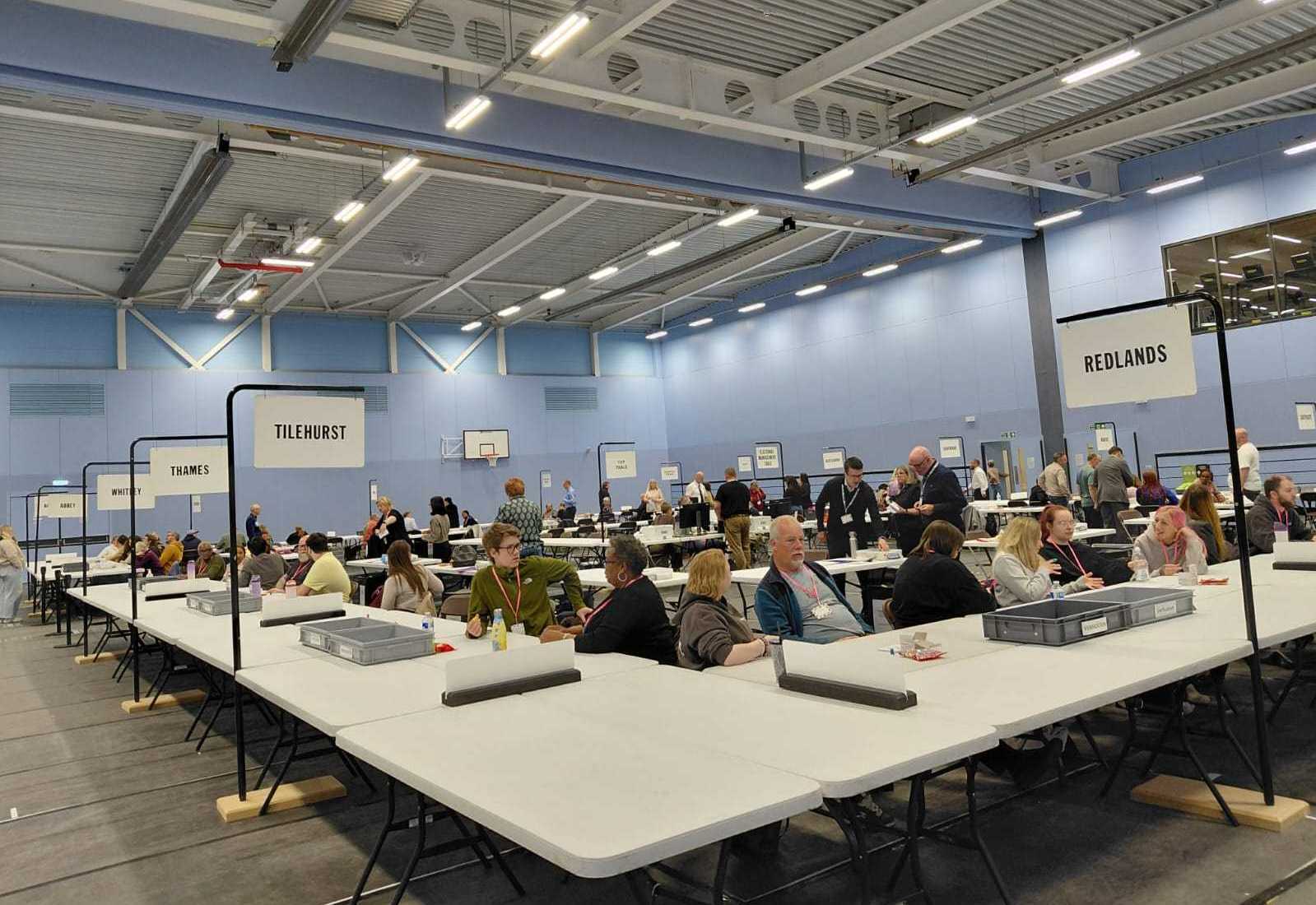
The local elections in Reading saw one of the strongest turnouts in decades and a tight popular‑vote race between Labour and the Greens.
Reading Borough Council had its first election since 2024 this month, in a result that saw the Labour Party maintain power but lose three lead councillors.
The Conservatives came in third place in the popular vote and were able to win seats from Labour and Reform UK.
Meanwhile, Reform came fourth in the popular vote but didn’t win any seats.
Here are the results broken down in numbers.
Biggest vote winners
Across all 16 wards, cllr Isobel Ballsdon won the highest amount of votes with 1,900.
Isobel Ballsdon (Conservative, Caversham Heights) – 1,900
Rob White (Green, Park) – 1,872
Kathryn McCann (Green, Redlands) – 1,549
Jacopo Lanzoni (Labour, Caversham) – 1,438
Louise Keane (Green, Katesgrove) – 1,340
How strong did winners need to be?
Winning candidates typically needed between 700 and 1,100 votes to top the poll, depending on the ward.
There were four wards where the candidate won their seat with less than 1,000 votes: Abbey, Coley, Norcot and Whitley.
The lowest of these was Jacqueline Dominguez, the Green Party candidate, who beat Karen Rowland, the Labour lead councillor for environmental services and community safety, with 792 votes to 683.
The average winning vote across the borough was just over 1,100 votes per successful candidate, reflecting higher turnouts and competitive multi‑party contests in many wards.
Borough‑wide popular vote
The Labour and Co-operative Party narrowly won the popular vote against the Greens, the leading opposition.
The total votes cast across all wards were as follows:
Labour and Co-operative Party – 15,300
Green Party – 15,113
Conservative Party – 9,179
Reform UK – 8,592
Liberal Democrats – 4,158
Your Local Liberal Party – 51
Social Democratic Party – 29
Independent – 27
Trade Unionist and Socialist Coalition – 25
Despite coming fourth in the popular vote, Clarence Mitchell, the Reform UK candidate for Emmer Green, lost his seat and came in third place in his ward.
The figure above includes the total votes for all of the candidates in Caversham Heights ward.
Some calculations provide an average for how much the two candidates won rather than adding up how much they achieved.
If that was accounted for, the Greens narrowly beat Labour with 14,300.5 votes to 14,227.
Turnout ward by ward
Turnout varied considerably across Reading, from just under a third of electors voting in some central wards to around half in wards north of the river.
Abbey – 32.29 per cent
Battle – 38.17 per cent
Caversham – 49.93 per cent
Caversham Heights – 59 per cent
Church – 34.01 per cent
Coley – 41.80 per cent
Emmer Green – 52.55 per cent
Katesgrove – 34.95 per cent
Kentwood – 46.62 per cent
Norcot – 36.11 per cent
Park – 42.81 per cent
Redlands – 40.17 per cent
Southcote – 37.14 per cent
Thames – 42.40 per cent
Tilehurst – 41.26 per cent
Whitley – 31.97 per cent
Across the borough, total turnout was 41.2 per cent, the highest for a Reading local election outside a general‑election year since 1991.