

















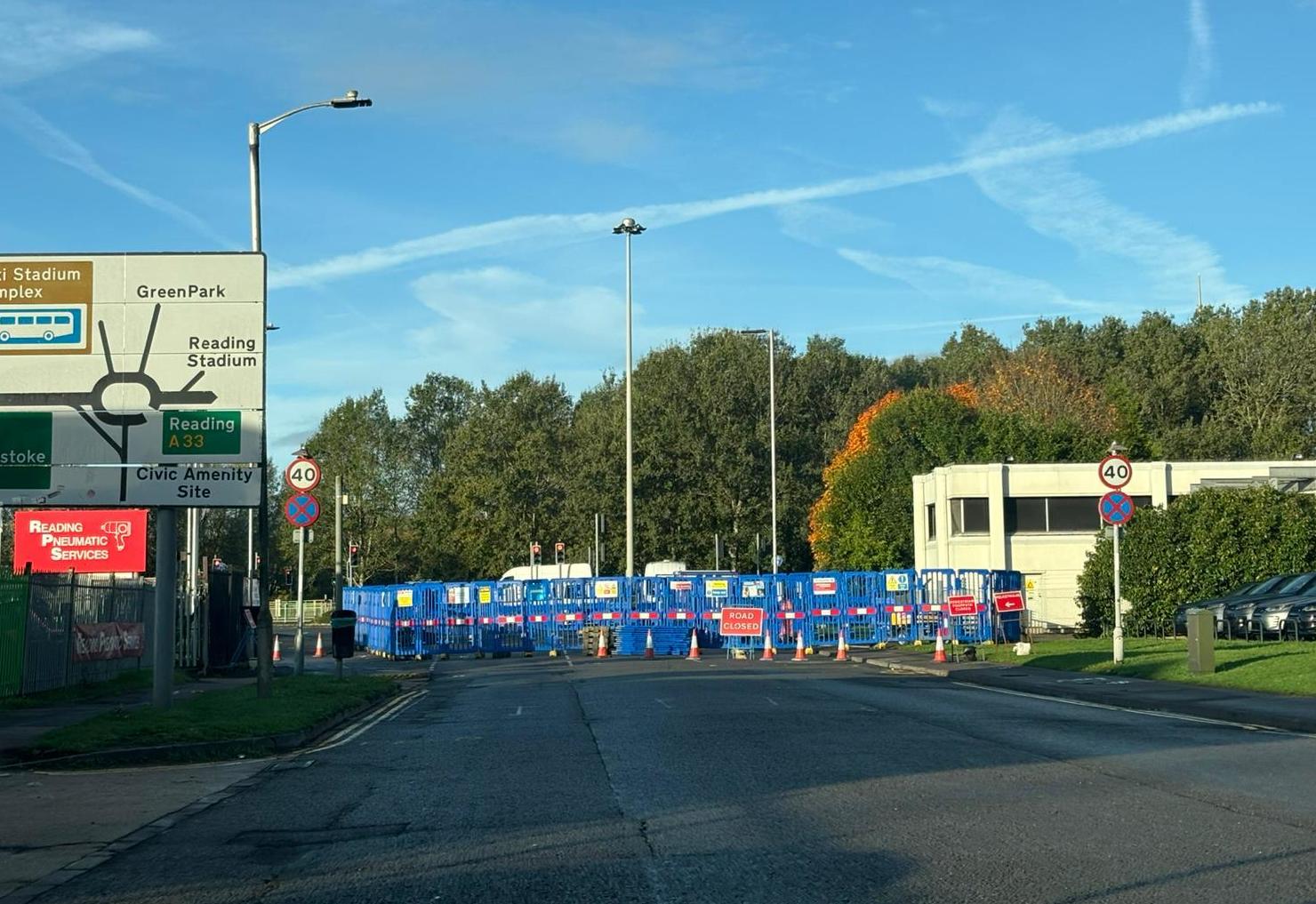
THAMES Water has announced that further delays to works on Bennet Road are to be expected amid serious safety concerns.
The utilities provider is set to undertake important emergency work after further complications with the current work have been compounded.
Major repairs got underway at the site back in October, as part of the underground network was in need of maintenance.
However an already complex set of repairs was made more treacherous after further investigation at the site found a sink hole at the site.
Now a second sink hole has been found, which repair teams suspect is linked to the first.
It exacerbates already difficult repairs due to the depth of the sewer needing work, unstable ground conditions, high groundwater levels and a high-voltage cable that had to be moved– as well as continuing management of the wastewater in the area.
Thames Water has said that it is “working closely” with Reading Borough Council, and that local authorities will be kept up to date with progress.
The work is now expected to continue through to the end of July.
Thames Water has also expressed hopes that access to the site, which has been limited as a result of the extent of the works needing to be carried out, will be alleviated.
A possible single lane of access, turning left out of Bennet Road, would ease traffic, but will rely on favourable safety assessments.
A Thames Water spokesperson said: “We understand there is frustration about the length of time this end of Bennet Road has been closed.
“This is proving to be an exceptionally complex repair with multiple issues emerging as we progress with the work.”
They explained: “There was no indication that this would be more than a repair on a major sewer, until we began to dig down, or of the extent of the issues we would find.
“It is very difficult to determine the cause of either sinkhole–our dedicated team is now working to ensure the long-term stability and safety of that area as well as repairing our sewer.
“In addition to the collapsed sewer and the sinkhole, the ground beneath the sewer is also incredibly soft and will need additional stabilisation work.”
Describing the extent of the issues uncovered, they said: “To give an insight of the scale we are dealing with, we have had to dig a shaft down about 10.5m (34ft), and this is a very dangerous piece of work for our team.
“The health and safety of those working and living in the area and of our employees has to be our number one priority.
“We hope people understand how challenging this work is and we are grateful for the patience they have shown.”