















Reading council’s position on data centres has been clarified, as thousands have signed a petition against one that could be built on the outskirts of the town.
This summer, a proposal emerged to demolish three offices occupied by Microsoft at Thames Valley Park in Earley and replace them with a data facility.
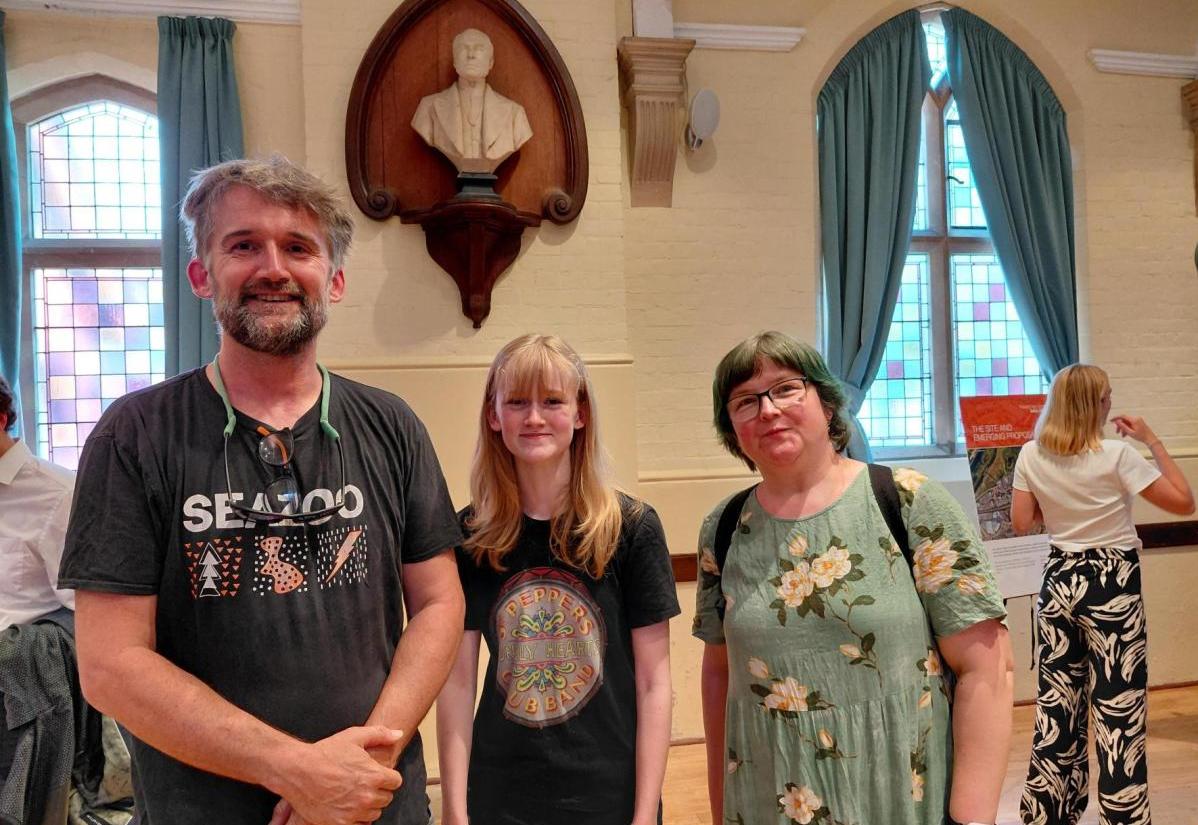
This sparked a number of concerns about depletion of resources and heat generation that were raised during a consultation event at Pearson Hall, Sonning in July.
A Change.org petition calling on Wokingham Borough Council, the planning authority, to oppose the project has received more than 5,000 signatures.
Councillor Kaisa Nikulina (Green, Katesgrove), who attended the consultation event, asked for Reading Borough Council’s position to be clarified at a policy committee meeting on September 16.
She asked: “What is the council’s position on the government’s approach to data centres, particularly where decisions may be taken nationally rather than locally?
“And where a development outside the borough could have a major impact on Reading, how will the council make sure the views and interests of Reading residents are represented?”
Micky Leng (Labour, Whitley), lead councillor for planning, said: “I welcome this chance to clarify this council’s position.
“Data centres were designated as critical national infrastructure in 2024.
“In January 2026, data centres were added to the list of businesses or commercial projects that can be regarded as nationally significant infrastructure projects, and potentially subject to a development consent order, under which applications can be made directly to the Secretary of State rather than the planning authority.
“There is no specific scale or threshold for what makes a data centre nationally significant, but a national policy document for data centres is expected.
“The council has a number of significant concerns around a large-scale development of data centres in the local area.
“This includes significant greenhouse gas that would put meeting our local net zero ambitions in jeopardy, additional pollution impacts, where, for reasons of supply limitations, fossil fuel-powered systems are going to be used, high levels of demand on energy and water supply and the implications that this could have on the supply networks, which would compromise the ability to provide utilities to the planned level of development in our Local Plan.
“Local environmental impacts including heat and noise impacts from the associated air cooling apparatus, and lastly the limited employment benefits of the data centre when compared to a more traditional warehouse.
“However, the council also understands that careful use of AI can offer significant benefits to individuals and organisations, including this council, and the increasing take-up of AI necessities and increasing need for data centres.
Cllr Leng also said heat could be recovered from data centres to warm buildings.
Once submitted, the scheme at Thames Valley Park will be subject to public consultation.
Given its proximity to Reading, the borough council will be a statutory consultee, and it will likely be discussed by the council’s planning applications committee.
Cllr Leng also mentioned that data centres may not require planning consent if a building falls within B8 storage and distribution planning use class.
Therefore, there are already several data centres in Reading which did not require planning permission.