
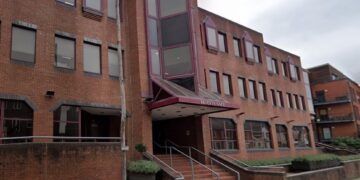
















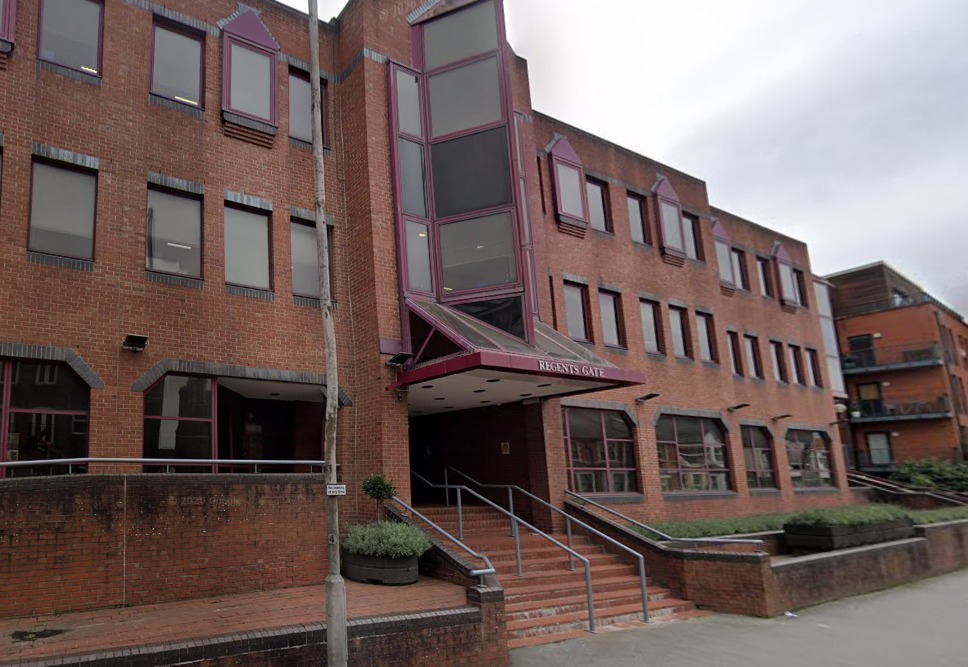
A plan to convert offices near Reading town centre into flats has been given the go-ahead despite fears being raised about flooding.
Regents Gate is a vacant office building which is passed by thousands of people each day, as it is situated on the busy route close to the town centre.
It is located on Crown Street, which drivers use to either get onto Southampton Street and the IDR, or carry on forwards to Berkeley Avenue.
The owning company had applied to convert it into 29 one and two-bedroom apartments.
The building was previously occupied by Spire Healthcare, which used the three-storey building for administrative functions until it chose to vacate it, with operations continuing at Spire Dunedin Hospital in Bath Road.
The conversion of commercial properties into residential use is typically considered permitted development.
However, the plan was refused by Reading Borough Council in April due to fears that it could be at risk of flooding.
Planning officer Connie Davies stated that people living in a building are ‘more vulnerable’ than those using it as offices, and noted that no flood risk assessment was submitted which would mitigate these concerns.
This prompted the owning company of the building to appeal against the decision to the government’s planning inspectorate.
Ultimately, the appeal was allowed after a flood risk assessment was provided that satisfied the inspector that Regents Gate is at low risk of flooding.
You can view the application by typing reference PL/26/0232 into the council’s planning portal.
The success of the appeal was reported to the council’s planning applications committee this month.
The report by Mark Worringham, the council’s principal planning officer, states: “Permission was originally refused due to insufficient information
submitted to demonstrate that the development would not result in unacceptable flood risk.
“Following the refusal, the appellant submitted additional flood risk information as part of the appeal process.
“The same information was also submitted under a subsequent application (PL/26/0539), which was approved on the basis that the additional
evidence satisfactorily addressed the council’s previous concerns regarding flooding.
“The inspector took account of the additional information submitted
after the original decision had been made and concluded that the flooding concerns had been adequately addressed.
“As a result, the appeal was allowed.”
The flood risk assessment was submitted in the latest application on April 22.
Assessing that application, planning officer Catrin Davies stated: “The submitted evidence confirms that the building is set at an elevated level above the surrounding ground and is physically separated from Crown Street by a gap.
“Modelling demonstrates that, even during extreme flood events, there is no realistic pathway for overland flow to enter the building.
“As such, the residential accommodation would remain dry, and the risk of internal flooding is considered negligible.”
The latest application was therefore approved on June 16.
The building owner now has two approved plans to convert Regents Gate into flats.
In his report into the appeal, Mr Worringham wrote: “Whilst the decision is accepted, it is disappointing that the Inspector gave weight to information that was not available to officers at the time the original decision was taken.
“Officers remain of the view that, had the additional flood risk information not been submitted, the appeal would likely have been dismissed.”