


















Volunteers in Reading have taken part in a nationwide water quality monitoring event that acts as a health check on rivers throughout the country.
Thousands of people took part in The Great UK Water Blitz, held in autumn and spring each year.
During the event, thousands of citizen scientists test water for nitrates and phosphates.
The latest campaign produced over 4,500 results, which is more than twice the number collected in the spring campaign.
Water quality was monitored at several locations in Reading for nitrates, which pose risks to human health and damage aquatic ecosystems, and phosphates, which reduce the oxygen in the water.
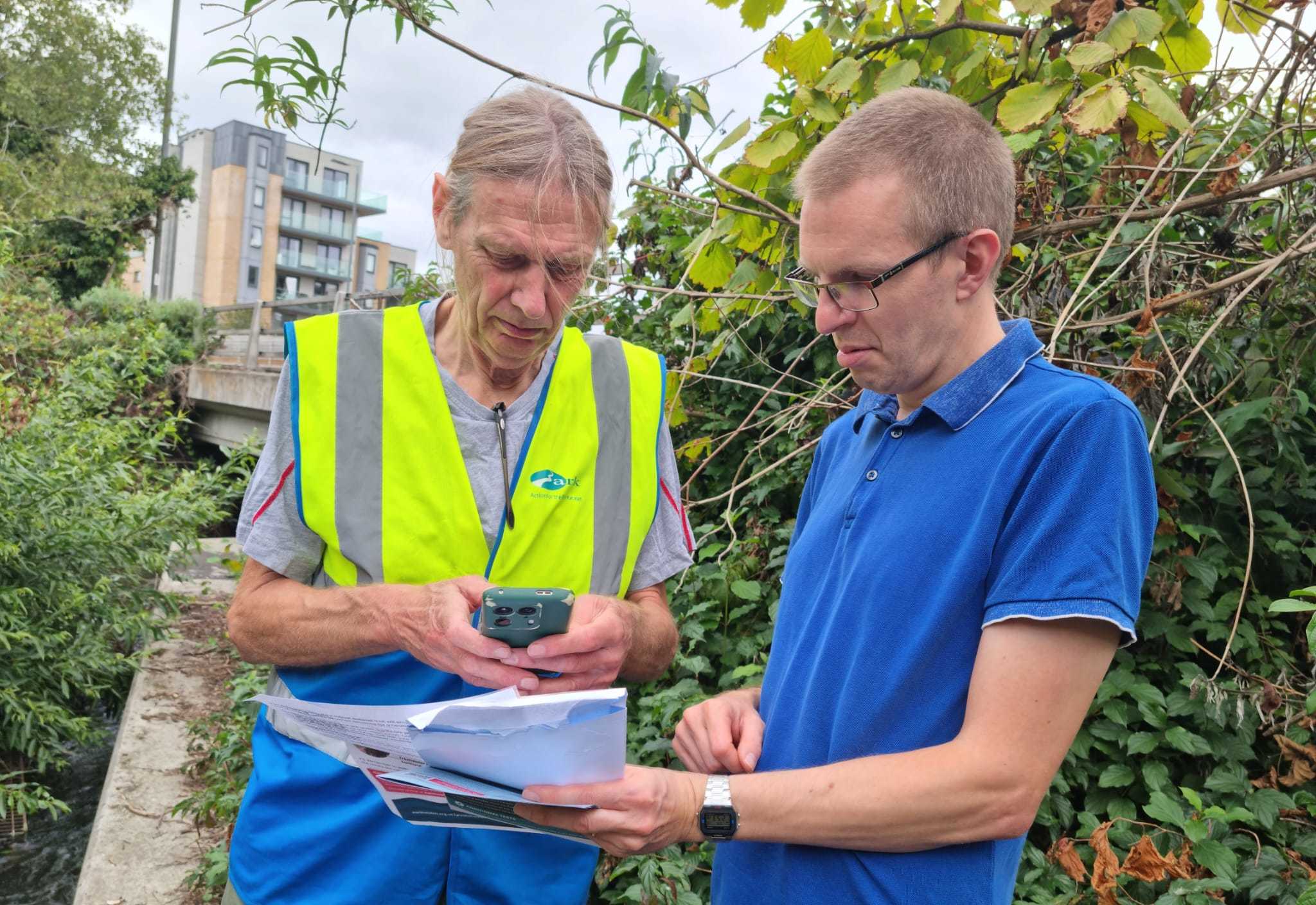
Volunteers in Reading included John Sharpe and councillor Richard Walkem (Green, Coley).
Mr Sharpe said: “You collect water from a jam jar on a string, then test it using two chemical phials.
“When the water changes colour, you can tell the level of nitrates and phosphates.
“We’ve seen a massive rise in nitrates, which is a nutrient used to grow things, but in the water it causes an excess of algae and weed growth, called eutrophication.
“This lowers oxygen and reduces the quality of water, which the rest of the ecosystem depends on.
Mr Sharpe tested the Holy Brook at two locations, adjacent to the A33 and to the rear of the Abbey Baptist Church, near where it flows into the River Kennet.
He also investigated the culvert that takes the Holy Brook under the town centre.
Mr Sharpe said: “Going in the culvert is amazing, but quite terrifying at times.
“I’m tall, so it’s pretty horrendous, I have to get on my hands and knees and crawl through the water, which is so knackering!”
Of the 19 places tested in Reading Borough, 11 were labelled red for high nutrient pollution, five places were labelled orange for moderate concentrations, and three were labelled green for low concentrations.
Mr Sharpe said: “The river was alive with fish, now it’s like an open sewer, it’s awful.
“Down by the Kennet Path it always stinks, I’ve been reporting that for years.
“That said, there is wildlife in the river, like otters, kingfishers, and bullhead fish.
“Near the old library, I was the first person to record seeing a brook lamprey.
“Sadly, we’ve also found demon shrimp, which are an invasive species.
“They lower biodiversity because they are always eating fish eggs.
“Also, the indigenous crayfish have been replaced.”
Cllr Walkem said: “It is great that volunteers are gathering this data to give us a greater public picture of the quality of the water in the river.
“The data shows the great job that nature does in reducing the nitrates as the water flows through Fobney Water Meadows.
“The invasive species will have been transported in by humans. It could have arrived on imperfectly cleaned fishing equipment.
“It is really important that those who wish to use or care about the river know what is going on in it. It is impossible to care about an issue until you know what the issue is.
“If the Green Party were in power, we would invest more in the Environment Agency to provide effective investigation and protection work to our waterways.
“We would take Thames Water into public ownership, so that the wastewater treatment problems seen in the Water Blitz data at other locations can be fixed directly with greater accountability.
“Many people wish to live alongside a healthier river in many places across Reading. This wish will only come to pass with sustained data and campaigning.
“Doing this kind of activity is also a great way to feel connected to our community and nature.”