



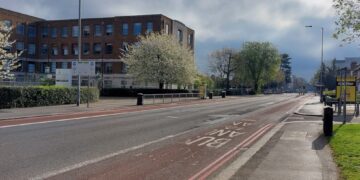
















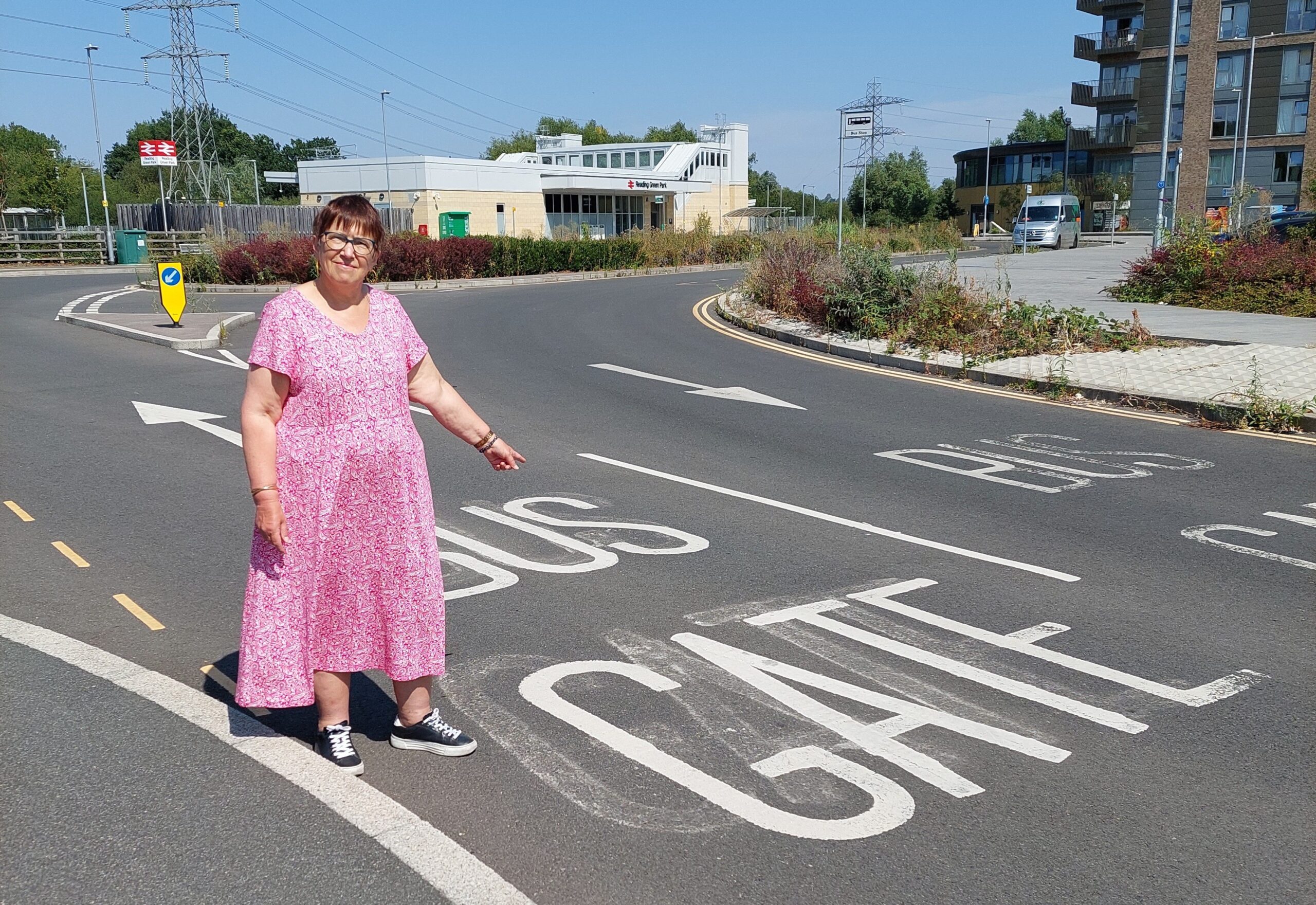
The reasons why thousands of people are fined for driving into bus lanes and gates in Reading might be down to insufficient signage, it has been argued.
Regular drivers are not allowed to enter bus lanes and gates, which typically allow only buses, cyclists, and other approved vehicles, such as taxis.
Anyone breaking this rule can expect a penalty charge notice (PCN) fine, which can be challenged.
The bus gate at Reading Green Park Station alone was responsible for 6,113 fines in less than two years.
Councillor Anne Thompson, the leader of the Liberal Democrat group on Reading Borough Council, argued that better signage is needed.
She raised this point at a policy committee meeting on Monday, July 13.
Cllr Thompson (Liberal Democrats, Tilehurst) mentioned that the 6,113 PCNs figure was provided to her at the policy committee meeting in June, which she was “astonished to hear.”
As a whole, 61,835 PCNs were issued for bus lane offences in 2024/25.
She contrasted this with the 19,008 PCNs issued in Swindon and 15,814 bus lane PCNs in Southampton.
Cllr Thompson said: “Why can drivers avoid infringing bus lanes in our neighbouring towns and cities, but not in Reading?
“The most obvious explanation for the discrepancy is that other councils have installed better signage and road markings to alert residents and visitors to bus lanes and bus gates.
“While Labour-run Reading council’s signage may be legally compliant, though this has been contested by at least one adjudicator at the Traffic Penalty Tribunal, it could clearly be much better.
“In order to treat Reading residents and visitors fairly and to keep traffic flowing, will the council commit to reviewing and improving signage for bus lanes and bus gates?”
She then suggested that the council could start with the worst hotspots.
Answering her, John Ennis (Labour, Southcote), lead councillor for transport, said: “The number of bus lane contraventions recorded in Reading is likely to reflect a combination of our compact urban geography, the scale of our bus-priority network, the volume of traffic using those corridors and active enforcement, rather than evidence that drivers are routinely being misled by the signing of restrictions.
“The signing and lining of bus lanes and bus gates is governed by national regulations, which are intended to ensure that restrictions are presented clearly and consistently to road users across the country.
“The council routinely inspects and maintains its signage and road markings, and considers representations, complaints and Traffic Penalty Tribunal decisions when reviewing the operation of traffic restrictions.
“Where evidence identifies opportunities to further improve clarity for motorists whilst maintaining effective bus priority, those improvements will be considered as appropriate.
“For those reasons, I do not consider a borough-wide review necessary.
“However, officers will continue to monitor locations that attract higher levels of contraventions as part of the council’s ongoing network management and maintenance responsibilities and will consider any targeted improvements where evidence demonstrates they would be beneficial.”