



















A plan to install a temporary building to provide beds for rough sleepers in Reading has been approved.
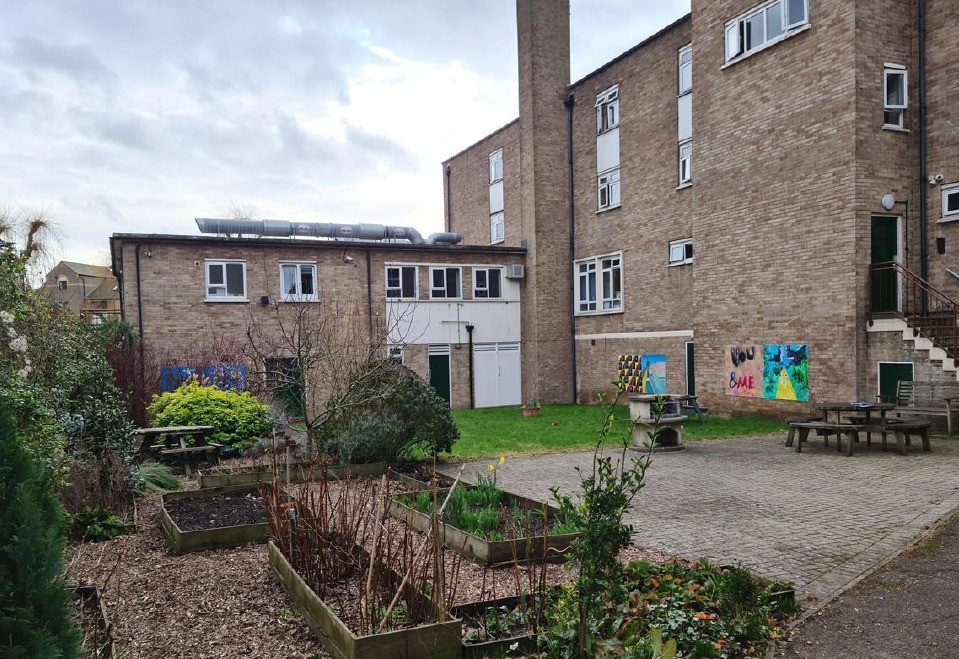
Earlier this year, The Salvation Army, a Christian church and charity, applied to install a modular building called a NAPpad to provide emergency bed spaces at its Willow House site in the town centre.
The NAPpad Night-time Accommodation Project by the charity provides assistance to vulnerable homeless people by providing a bed for the night.
First installed in York in November 2021, the NAPpad provides four ‘micro-flats’ for people with a bed, heating and toilet facilities.
But in order for the NAPpad to be installed, The Salvation Army required planning permission from Reading Borough Council.
The project was assessed by the planning officer Ethne Humphreys.
While she acknowledged the clear benefit the NAPpad serves in providing refuge for people, she did see harm in the ‘utilitarian appearance’ of the modular building and the loss of vegetation and green space, as The Salvation Army had applied to install it on existing garden space.
Mrs Humphreys wrote: “Given its appearance, similar to that of a storage unit, it would not be suitable for permanent retention.
“The siting of the unit closer to the boundary on existing soft landscaping (garden) results in a loss of soft landscaping.”
Despite these concerns, she concluded that the social benefits outweighed the identified harms.
Mrs Humphreys wrote: “Whilst the design would result in a degree of harm, it is not considered to result in such an intensive use on the site on a temporary basis to result in material harm to neighbouring properties nor harm to the character and appearance of the area.
“Homelessness and rough sleeping is among the most urgent and complex challenges within Reading Borough.
“Rough sleeping is one of the most visible forms of homelessness, and it affects some of the most vulnerable in society.”
It was also noted that the people who will stay in the building will benefit from the care and support of volunteers within Willow House, which is a Salvation Army ‘Lifehouse’ that provides roughly 38-44 bed spaces for homeless people.
Mrs Humphreys stated that it is well-established and intensively managed, with a continuous staff presence that should be able to respond immediately to any issues the users may have.
The installation of the NAPpad was granted, and it can stay for a maximum of 10 years.
After that, a planning condition states that it must be removed.
You can view the approved application by typing reference PL/26/0387 into the council’s planning portal.