














• Make a contribution
  • Get the Print Edition
  • Sign up for our daily newsletter
Monday, June 8, 2026
  • Login
Reading Today Online
  • HOME
  • YOUR AREA
    • All
    • Caversham
    • Central Reading
    • East Reading
    • Katesgrove
    • Reading
    • Southcote & Coley
    • Tilehurst & Norcot
    • Whitley

    Reading rabbi brands Reform UK ‘liars’ over White Lives Matter post

    Dad who assisted in Gaza Flotilla arrives safely back in Reading

    Charity wins permission to convert cafe into support centre

    Council defeated after rejecting plan to seal off huge house in Caversham

    Planning round-up: Improvements set for well-known family pub in Reading

    FROM THE VICE CHANCELLOR: Talking and listening about animals in research

    Witness appeal launched after road collision leaves motorcyclist hospitalised

    Family of murdered teen meet with Prime Minister to call for online safety for children

    Man found carrying stolen alcohol during police operation in Reading town centre

  • COMMUNITY
  • CRIME
  • READING FC
  • SPORT
    • All
    • Basketball
    • Football
    • Rugby

    ‘We were unplayable at times’: Reading FC CEO Joe Jacobson reflects on last season

    Sponsor revealed for Burghfield FC tournament

    Sport Together Berkshire hails day of sport, smiles, and success in latest event

    Reading FC confirm first pre-season friendly of the summer

    Reading FC face battle for transfer target as Oxford United move ahead

    ‘He’d be a big loss’: Reading FC legend comments on transfer speculation surrounding Royals’ star

    Former Reading FC star becomes free agent after being released by Championship club

    Berkshire and Oxfordshire take win a piece in NCCA T20 double header

    Shortlist announced for Football in Berkshire 2026 awards

  • ENTERTAINMENT
    • ARTS
    • READING FESTIVAL
    • READING PRIDE
    • WOKINGHAM FESTIVAL
  • READING FESTIVAL
  • BUSINESS
  • MORE…
    • ADVERTISE
    • CONTACT US
No Result
View All Result
Reading Today Online
No Result
View All Result
Home Featured

World Bee Day: UoR says pollinators face continued and increasing threats

Jake Clothier by Jake Clothier
Tuesday, May 20, 2025 5:30 am
in Featured, Reading
A A
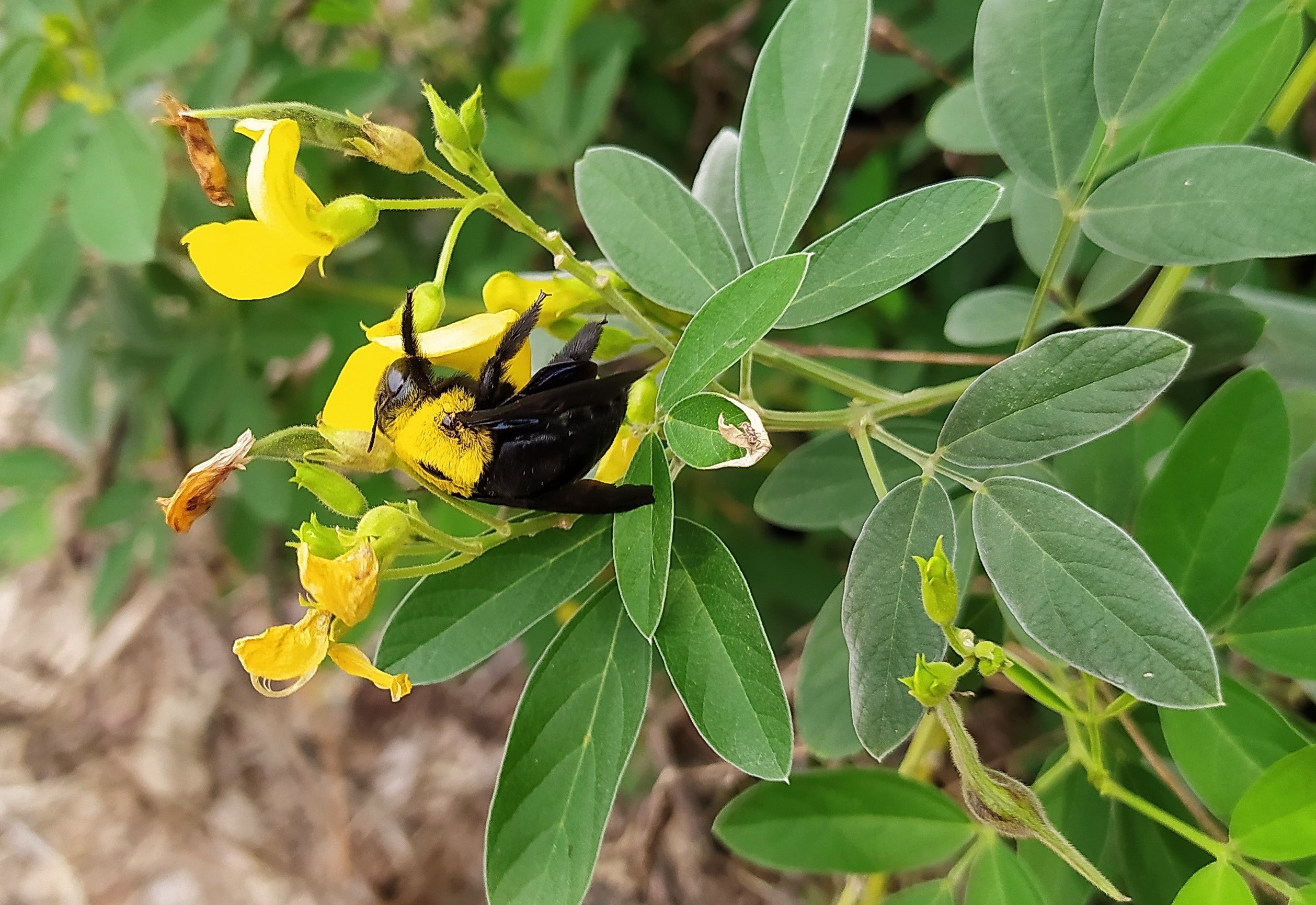
The University of Reading has warned that bee populations are set to face even more threats over the next decade, according to a new study. Picture: The University of Reading

The University of Reading has warned that bee populations are set to face even more threats over the next decade, according to a new study. Picture: The University of Reading

Share on FacebookShare on Twitter

THE UNIVERSITY of Reading has warned that bee populations are set to face even more threats over the next decade, according to a new study.

A report from Bee:wild has identified the top 12 emerging threats which could accelerate the loss of vital pollinators, as outlined by ten of the world’s leading experts.

It comes as one of the first publications of Bee:wild, a new science-led global campaign to save pollinators; pollinators like bees, butterflies, some birds and bats are vital to nature and our food supply with almost 90% of flowering plants and over three-quarters of the world’s staple crops depending on them.

However habitat loss, pesticides, climate change and invasive species have caused their severe decline, including the extinction of some bee species.

Experts have explained that a new wave of threats could emerge over the next few years.

These include war and conflict, which force countries to grown fewer crop types and leave pollinators without diverse food, as well as air pollution, which directly affects their survival, reproduction, and growth.

Related posts

Reading rabbi brands Reform UK ‘liars’ over White Lives Matter post

Dad who assisted in Gaza Flotilla arrives safely back in Reading

Charity wins permission to convert cafe into support centre

Council defeated after rejecting plan to seal off huge house in Caversham

Pesticides are also weakening them, especially as they face increasingly dangerous mixes of different pesticides, especially in developing countries.

Meanwhile more frequent and larger wildfires, destroying habitats and making recovery harder, and microplastic particles are contaminating beehives across Europe, with testing from 315 honey bee colonies revealing synthetic materials like PET plastic in most hives.

Artificial light at night is also reducing flower visits by nocturnal pollinators by 62% and inhibiting the crucial role moths and night insects play in pollination.

The report also outlines some threats that unintentionally stem from climate actions, which could be improved to protect biodiversity at the same time.

It explains that planting a mix of flowering trees as well as non-flowering fast-growing trees for carbon capture would restore pollination opportunities.

Avoiding pollinator-rich areas and restoring habitats after mining for car battery materials would also help reduce the impact of mining in the long-term.

Among the steps that the report calls on us to take are stronger laws limiting antibiotic pollution that harms bee health, as well as breeding crops with enhanced pollen and nectar for better pollinator nutrition

It also explains that transitioning to electric vehicles to reduce air pollution affecting pollinators and creating flower-rich habitats within solar parks.

It also calls for the development of RNAi-based (Ribonucleic acid) treatments that target pests without harming beneficial insects.

The University of Reading’s Professor Simon Potts, lead author and chair of Bee:wild’s Scientific Advisory Board, says: “Identifying new threats and finding ways to protect pollinators early is key to preventing further major declines.”

“By acting early, we can reduce harm and help pollinators continue their important work in nature and food production; various conservation opportunities already exist and more are emerging.

“This is not just a conservation issue, pollinators are central to our food systems, climate resilience, and economic security–protecting pollinators means protecting ourselves.”

Dr Deepa Senapathi, Head of Department of Sustainable Land Management at the University of Reading, is co-author of the report and Vice-Chair of Bee:wild Scientific Advisory Board.

She explained: “Meaningful action to protect bees is not a ;nice-to-have’ future aspiration – practical solutions that we can implement now already exist and more are emerging.

“The most promising opportunities are ones that tackle multiple problems at once; focused and determined action could significantly slow and even reverse pollinator decline while creating environments that benefit both nature and people.”

“It will take effort from everyone to address these threats–we need to maintain, manage and improve our natural habitats to create safe spaces for pollinators.

“Individual actions like providing food and nesting areas in our own back gardens can help in a big way, but policy changes and individual actions must work together so everything from gardens and farms to public spaces and wider landscapes can all become pollinator-friendly habitats.”

Eva Kruse, Executive Director of Bee:wild, which commissioned the report said: “We were already sounding the alarm on the decline of our pollinators, but this new report underlines that the range of threats are expanding.

“Rather than being filled with hopelessness, the purpose of the Bee:wild campaign is to fuel awareness, urgency and give everyone agency.

“There’s a lot we can all do to help save our pollinators, in our homes and everyday lives–planting flowering plants to feed them, providing outdoor shelter and considering healthier diets like plant-based as well as pesticide-free, all matter a lot.”

“It’s getting harder for our pollinators but we can all play a part in protecting them and building a sustainable future for all living things.”

Razan Khalifa Al Mubarak, President of the International Union for Conservation of Nature (IUCN) and Board Member of nature conservation organisation Re:wild – which is behind the Bee:wild campaign – provided the report’s foreword.

“The choices we make today will shape the future – not only for pollinators, but for all life on Earth. Together, we can ensure that these remarkable species continue their vital work, sustaining the natural world that sustains us all.”


Keep up to date by signing up for our daily newsletter

We don’t spam we only send our newsletter to people who have requested it.

Check your inbox or spam folder to confirm your subscription.

Previous Post

Murder Trial Tonight casts audience as jury in immersive true crime show at The Hexagon

Next Post

Vyome Singh named Reading New Comedian of the Year– after only starting stand-up in January

FOLLOW US

POPULAR STORIES

  • Former Reading FC star becomes free agent after being released by Championship club

    0 shares
    Share 0 Tweet 0
  • Teenage boy charged with murder following Lower Earley stabbing

    0 shares
    Share 0 Tweet 0
  • Latest on the redevelopment of The Oracle in Reading

    0 shares
    Share 0 Tweet 0
  • One arrested, one dead, and murder investigation launched after Lower Earley stabbing

    0 shares
    Share 0 Tweet 0
  • One dead, two being treated, following confirmed Meningitis case in Reading

    0 shares
    Share 0 Tweet 0

RDG.Today – which is a Social Enterprise – provides Reading Borough with free, independent news coverage.

If you are able, please support our work

Click Here to Support RDG.Today

ABOUT US

Reading Today is dedicated to providing news online across the whole of the Borough of Reading. It is a Social Enterprise, existing to support the various communities in Reading Borough.

CONTACT US

news@wokinghampaper.co.uk

Reading Today Logo

Keep up to date with our daily newsletter

We don’t spam we only send our newsletter to people that have subscribed

Check your inbox or spam folder to confirm your subscription.

The Wokingham Paper Ltd publications are regulated by IPSO – the Independent Press Standards Organisation.
If you have a complaint about a  The Wokingham Paper Ltd  publication in print or online, you should, in the first instance, contact the publication concerned, email: editor@wokingham.today, or telephone: 0118 327 2662. If it is not resolved to your satisfaction, you should contact IPSO by telephone: 0300 123 2220, or visit its website: www.ipso.co.uk. Members of the public are welcome to contact IPSO at any time if they are not sure how to proceed, or need advice on how to frame a complaint.

Welcome Back!

Login to your account below

Forgotten Password?

Retrieve your password

Please enter your username or email address to reset your password.

Log In
No Result
View All Result
  • HOME
  • MY AREA
    • Central Reading
    • East Reading
    • Bracknell
    • Calcot
    • Caversham
    • Crowthorne
    • Earley
  • CRIME
  • COMMUNITY
  • SPORT
    • Reading FC
    • Football
    • Rugby
    • Basketball
  • ENTERTAINMENT
    • ARTS
    • READING PRIDE
    • WOKINGHAM FESTIVAL
  • READING FESTIVAL
  • OBITUARIES
  • BUSINESS
  • ADVERTISE
  • CONTACT US
  • SUPPORT US
  • SIGN UP FOR OUR NEWSLETTER
  • WHERE TO GET THE PRINT EDITION

© 2021 - The Wokingham Paper Ltd - All Right Reserved.