

















• Make a contribution
  • Get the Print Edition
  • Sign up for our daily newsletter
Saturday, April 18, 2026
  • Login
Reading Today Online
  • HOME
  • YOUR AREA
    • All
    • Caversham
    • Central Reading
    • East Reading
    • Katesgrove
    • Reading
    • Southcote & Coley
    • Tilehurst & Norcot
    • Whitley

    Police search for wanted man with links to Reading

    Forward-thinking Henley businesses get ready for climate change

    Reading FC clash sparks major police crackdown with dispersal zones and drones deployed

    RaW Sounds Today: The Paradox Twin, Purple Grace, shallowdaze

    All candidates announced for Reading Borough Council elections

    ‘The public is repulsed by trail hunting’: Bloodied foxes pile up outside Reading Station as charity calls for tougher hunting laws

    The Way Ministry Reading urgently seeks building for night shelter

    Council announces return of free monthly bike maintenance sessions with Dr Bike

    Olivier awards for Paddington Bear and Jessica Swale, honorary patron at Wokingham Theatre

  • COMMUNITY
  • CRIME
  • READING FC
  • SPORT
    • All
    • Basketball
    • Football
    • Rugby

    ‘Richardson will never give us attacking football’: Reading FC fans react to Couhig’s open letter

    Reading FC clash sparks major police crackdown with dispersal zones and drones deployed

    Reading FC: Leam Richardson faces pressure as developments expected at club

    ‘Progress takes time’: Couhig addresses fans in open letter as pressure grows on Reading FC boss Leam Richardson

    All-star snooker tournament set to be broadcast live from Reading this week

    ‘He’s surely lost the dressing room’: Reading FC fans ask for change as pressure mounts on Leam Richardson

    Former Reading FC winger nominated for Championship Player of the Season

    More than 170 pupils take part in Whitley rugby festival

    Former Reading School pupil to return in seven-marathon challenge for mental health

  • ENTERTAINMENT
    • ARTS
    • READING FESTIVAL
    • READING PRIDE
    • WOKINGHAM FESTIVAL
  • READING FESTIVAL
  • BUSINESS
  • MORE…
    • ADVERTISE
    • CONTACT US
No Result
View All Result
Reading Today Online
No Result
View All Result
Home Education

University of Reading discovers head lice on ancient mummies can be used to recover DNA

Jess Warren by Jess Warren
Tuesday, December 28, 2021 9:02 pm
in Education, Featured, Wokingham
A A
Head lice are being used to hlp recover human DNA from the past. Picture: University of Reading

Head lice are being used to hlp recover human DNA from the past. Picture: University of Reading

Share on FacebookShare on Twitter

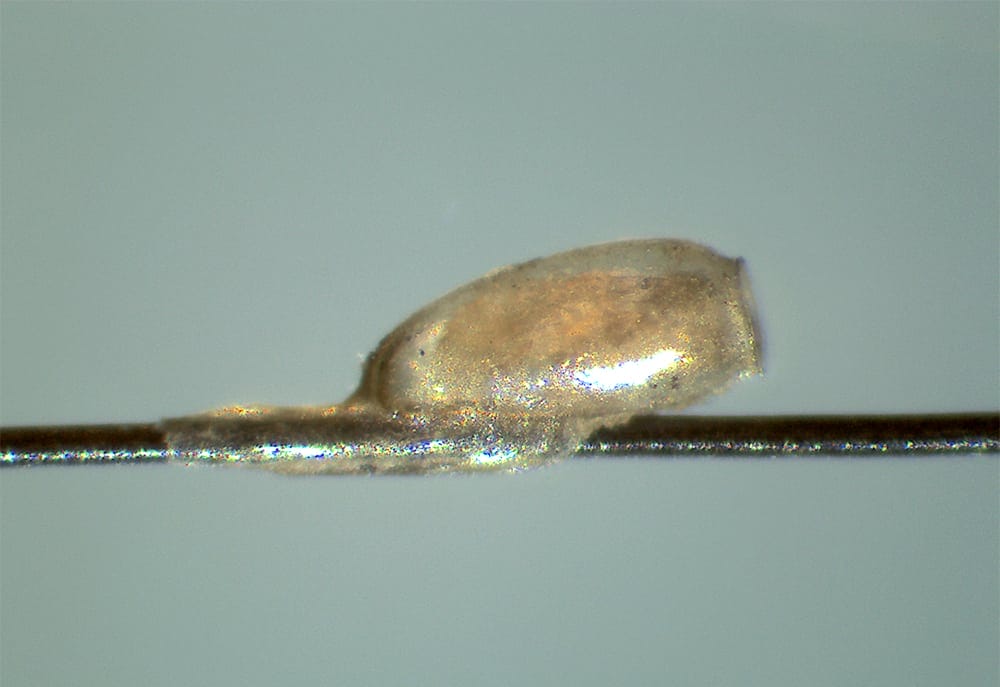
SCIENTISTS at the University of Reading have discovered that human DNA can be extracted from the cement-like substance head lice used to glue their eggs to hairs thousands of years ago.

It is thought that this discovery will provide an important new window into the past.

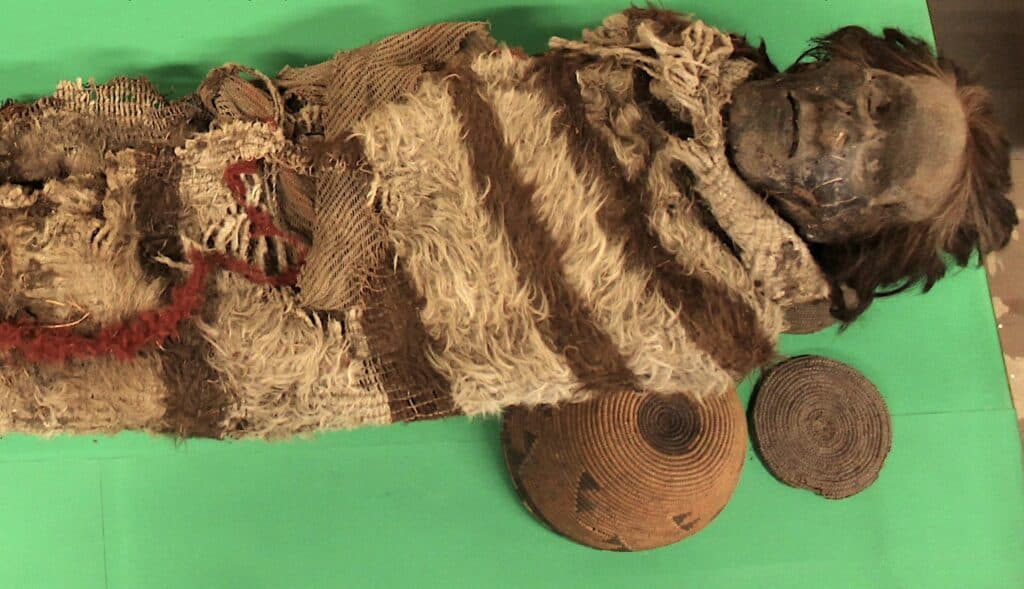
In a new study, scientists recovered DNA from mummified remains that date back 1,500 to 2,000 years.

This is possible because skin cells from the scalp become encased in the cement-like substance produced by female lice as they attach eggs, known as nits, to the hair.
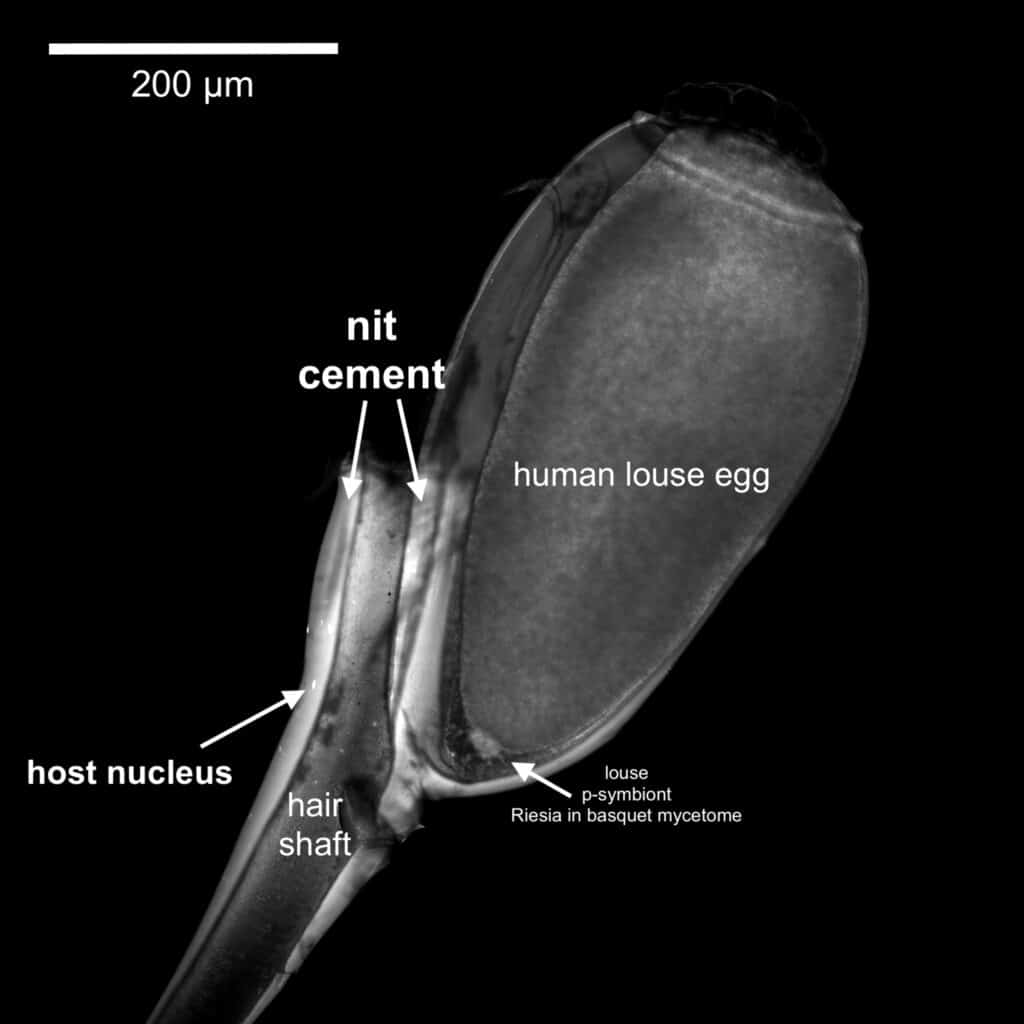
Analysis of this newly-recovered ancient DNA has revealed clues about pre-Columbian human migration patterns within South America.

Related posts

Outrage as patient is told ‘women bleed all the time’ at Royal Berkshire Hospital

Call made for domestic homicide review in Reading by mum who’s daughter died

Reading MPs celebrate £2 million upgrade for Hexagon Theatre

Fresh plan to replace long closed pub in Reading with flats and a shop

It is hoped that this method could allow many more unique samples to be studied from human remains where bone and tooth samples are unavailable.

The research was led by the University of Reading, working in collaboration with the National University of San Juan, Argentina; Bangor University, Wales; the Oxford University Museum of Natural History; and the University of Copenhagen, Denmark.

It has been published in the journal Molecular Biology and Evolution.

Dr Alejandra Perotti, associate professor in invertebrate biology at the University of Reading, led the research.

She said: “Like the fictional story of mosquitos encased in amber in the film Jurassic Park, carrying the DNA of the dinosaur host, we have shown that our genetic information can be preserved by the sticky substance produced by headlice on our hair.

“In addition to genetics, lice biology can provide valuable clues about how people lived and died thousands of years ago.”
Dr Perotti said that more researchers are looking into migration and diversity in ancient human populations.

“Headlice have accompanied humans throughout their entire existence, so this new method could open the door to a goldmine of information about our ancestors, while preserving unique specimens,” she explained.

Until now, ancient DNA has mostly been extracted from dense bone from the skull or from inside teeth, as these provide the best quality samples.

However, this can cause severe damage to the specimens which compromise future scientific analysis.

It is also against cultural beliefs to take samples from indigenous early remains.

Recovering DNA from the cement-like substance delivered by lice provides a solution to this problem.

Dr Mikkel Winther Pedersen from the GLOBE institute at the University of Copenhagen, and first author, said that the high amount of DNA yield from the nit cements came as a surprise.

“It was striking to me that such small amounts could still give us all this information about who these people were, and how the lice related to other lice species but also giving us hints to possible viral diseases,” he added.

As well as the DNA analysis, scientists are also able to draw conclusions about a person and the conditions in which they lived from the position of the nits on their hair and from the length of the cement tubes.

Their health and even cause of death can be indicated by the interpretation of the biology of the nits.

Analysis of the recovered DNA revealed a genetic link between three of the mummies and humans in Amazonia 2,000 years ago.

This shows for the first time that the original population of the San Juan province migrated from the land and rainforests of the Amazon in the North of the continent, south of current Venezuela and Colombia.

It also found the earliest direct evidence of Merkel cell Polymavirus.

The virus, discovered in 2008, is shed by healthy human skin and can on rare occasions get into the body and cause skin cancer.

The discovery opens up the possibility that head lice could spread the virus.

Keep up to date by signing up for our daily newsletter

We don’t spam we only send our newsletter to people who have requested it.

Check your inbox or spam folder to confirm your subscription.

Previous Post

Mum diagnoses daughter’s rare life-threatening disease

Next Post

Reading-based law firm Blandy & Blandy announces new year promotions

FOLLOW US

POPULAR STORIES

  • ‘They were fantastic, we couldn’t get near them’: Neil Warnock reflects on Reading’s record-breaking ‘106’ season

    0 shares
    Share 0 Tweet 0
  • ‘We let him go for nothing and he’s now worth millions’: Former Reading FC striker proves his worth as clubs for summer signing

    0 shares
    Share 0 Tweet 0
  • Former Reading FC striker takes charge as manager at National League South side

    0 shares
    Share 0 Tweet 0
  • Reading Half Marathon 2026: Relive the Action in Our Picture Gallery

    0 shares
    Share 0 Tweet 0
  • Changes coming for Waitrose supermarket in Caversham

    0 shares
    Share 0 Tweet 0

RDG.Today – which is a Social Enterprise – provides Reading Borough with free, independent news coverage.

If you are able, please support our work

Click Here to Support RDG.Today

ABOUT US

Reading Today is dedicated to providing news online across the whole of the Borough of Reading. It is a Social Enterprise, existing to support the various communities in Reading Borough.

CONTACT US

news@wokinghampaper.co.uk

Reading Today Logo

Keep up to date with our daily newsletter

We don’t spam we only send our newsletter to people that have subscribed

Check your inbox or spam folder to confirm your subscription.

The Wokingham Paper Ltd publications are regulated by IPSO – the Independent Press Standards Organisation.
If you have a complaint about a  The Wokingham Paper Ltd  publication in print or online, you should, in the first instance, contact the publication concerned, email: editor@wokingham.today, or telephone: 0118 327 2662. If it is not resolved to your satisfaction, you should contact IPSO by telephone: 0300 123 2220, or visit its website: www.ipso.co.uk. Members of the public are welcome to contact IPSO at any time if they are not sure how to proceed, or need advice on how to frame a complaint.

Welcome Back!

Login to your account below

Forgotten Password?

Retrieve your password

Please enter your username or email address to reset your password.

Log In
No Result
View All Result
  • HOME
  • MY AREA
    • Central Reading
    • East Reading
    • Bracknell
    • Calcot
    • Caversham
    • Crowthorne
    • Earley
  • CRIME
  • COMMUNITY
  • SPORT
    • Reading FC
    • Football
    • Rugby
    • Basketball
  • ENTERTAINMENT
    • ARTS
    • READING PRIDE
    • WOKINGHAM FESTIVAL
  • READING FESTIVAL
  • OBITUARIES
  • BUSINESS
  • ADVERTISE
  • CONTACT US
  • SUPPORT US
  • SIGN UP FOR OUR NEWSLETTER
  • WHERE TO GET THE PRINT EDITION

© 2021 - The Wokingham Paper Ltd - All Right Reserved.