












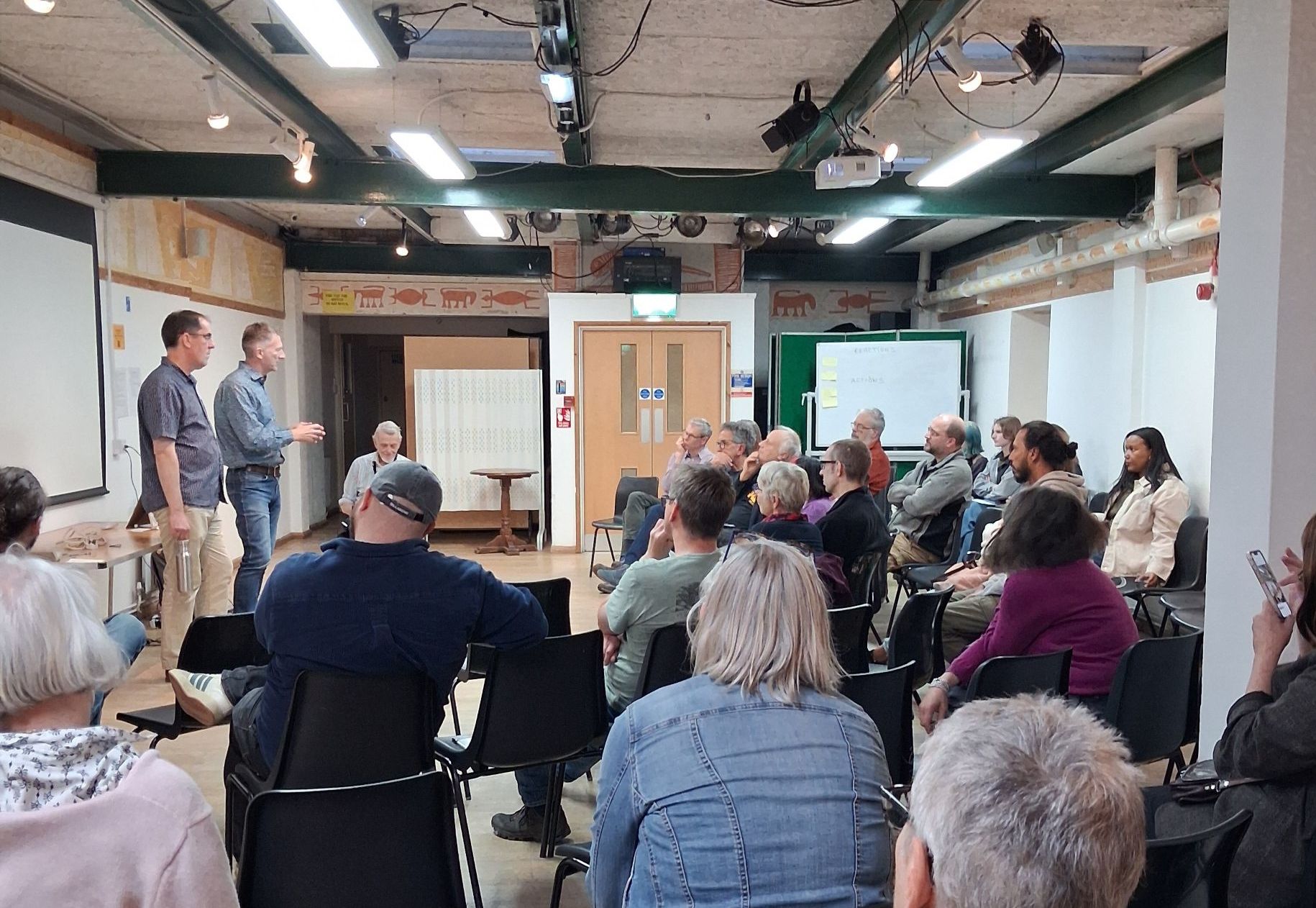
A FILM being shown throughout the nation gave Reading viewers an opportunity to better understand the risks of climate change locally.
The People’s Emergency Briefing, a film presented by naturalist Chris Packham, was screened at Reading International Solidarity Centre (RISC) on Friday, as part of this year’s Reading Climate Festival.
In it, experts explain the effects of global warming on economics, climate, weather, energy, food security, nature, and health.
The People’s Emergency Briefing also explores possible solutions, and is being shown at an increasing number of venues around the country.
Reading and Mid-Berks Steering Group member Anne Coffey said: “Many people who watch this film have been so inspired by it that they are planning their own screenings so that more audiences can see it.
“People worry about UK food prices rising, but we depend on other countries for a large percentage of our food.
“If those lands experience droughts, wildfires or flooding that destroys most of their crops, it affects the prices we are charged.
“But in our own country, extreme weather is already affecting food production, too.
“As one farmer in the film says about unprecedented flooding he experienced, ‘I was farming water, not soil.’”
The film lasts 45 minutes, and is followed by an opportunity for audience members to respond to what they have seen.
“They are often angry that the Government is not making people aware of the extent to which climate change will affect their lives,” said Anne.
“But they also find hope in the positive solutions covered in the film, and discuss how these might be actioned in their communities.”
Screenings of the film end with questions put to a local expert.
For this event Professor of Ocean and Earth Observation Chris Merchant; and Dylan Parkes, head of Strategic Engagement for Climate & Sustainability, both from the University of Reading, provided insight.
They explained that fossil fuel companies often control the national narrative around climate change, adding that these organisations powerfully lobby MPs.
“But as more people become aware that this is what is happening, it becomes possible to forge a more hopeful pathway,” said Anne.
Asked about nature depletion, Dylan Parkes pointed out that nature recovery work benefits not only the climate, but people’s well-being and resilience too.
Professor Merchant reminded the audience that ‘sixty million small actions do make a difference’ and that even simple measures can be powerful when practised by large numbers of people.
In his view it is important to continue to lobby MPs, and to make their social and work circles aware that failing to meet Net Zero will multiply the risks we already face.
Groups organising screenings of the film are hoping to persuade the government to arrange a national televised briefing led by independent experts, with the aim of countering misinformation being spread about climate change.
Screenings are being shown throughout the nation.
The next local opportunity to see it locally is tonight, Tuesday, June 16, from 7.30pm until 9.30pm at Caversham Methodist Church, Ardler Road.
Booking is via: eventbrite.co.uk
For information, visit: nebriefing.org