

















On the window of Reading Bike Hub, new logos now sit alongside the bikes: Late Skates, Skate Doctor and Reading Rollers. Inside, the space is brighter, busier and livelier than when it first opened three months ago.
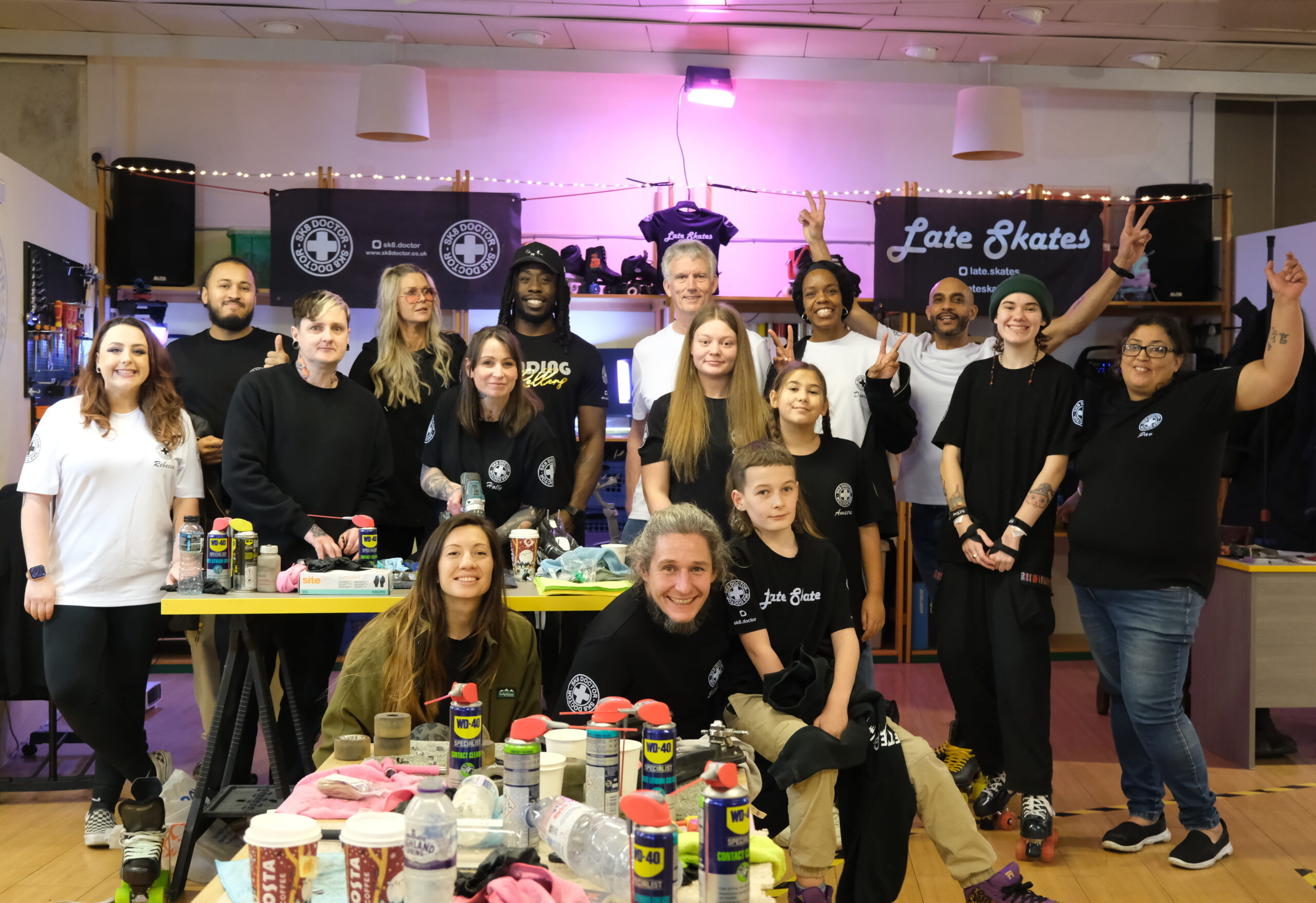
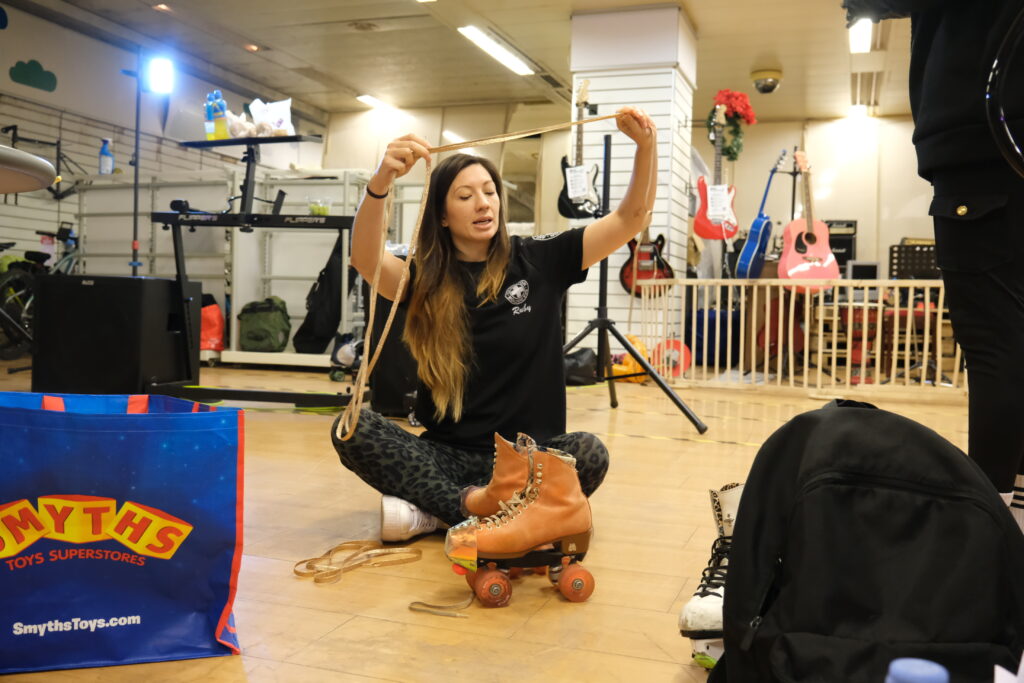
Skate Doctor hosted its very first skate repair workshop inside the hub, whilst the home of Late Skates has also gone into service for skaters. People gathered in the shop, learning how to fix their rollers, while some others rolled around, as if dancing through the whole space.
Reading skaters finally had a repair home for their skates, without having to travel to London, where the closest repair shop is located.
Jamil, organiser of both Late Skates and its sponsor, Skate Doctor, said the workshop was designed for education. Skaters got to try hands-on repair with cleaning supplements, most of which were accessible from local grocery stores instead of skate-dedicated shops, which are much more expensive.
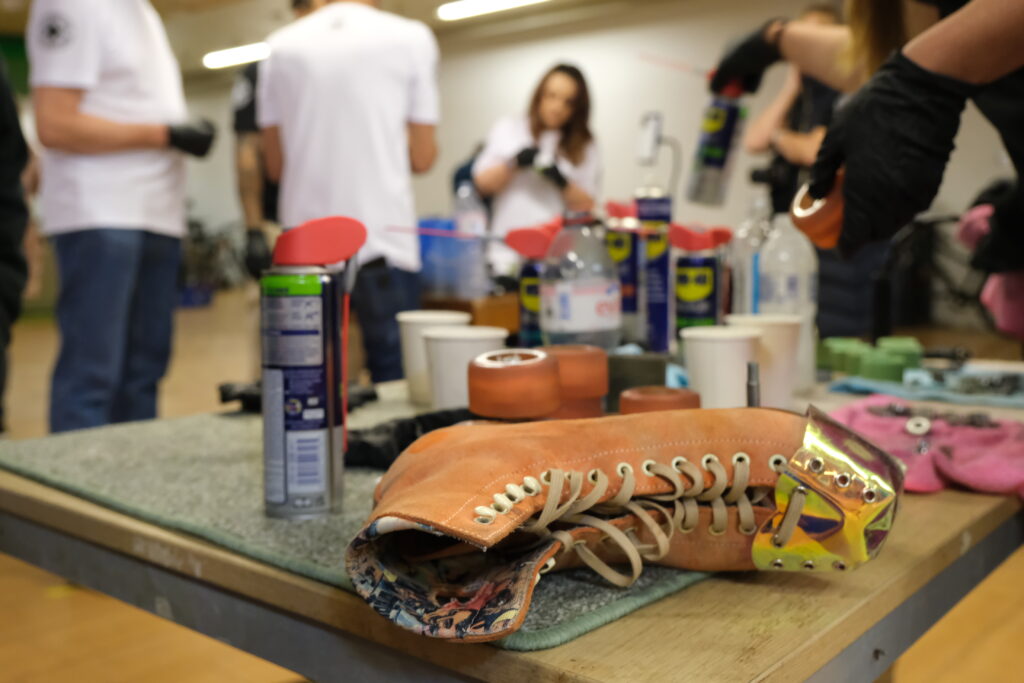
A lot of people come in without knowing that the wheels require regular repairs. Jamil said, when the wheels grow old, they become less smooth when spinning. Maintenance is key to keep skating safely and confidently.
Skating has grown more popular in recent years. Late Skates has had its largest group of 60 people skating in the park, while the number of individual joiners has gone up to 150, and Late Skates has got almost a thousand followers on Instagram.
Jamil recalled that Late Skates started out as a night skating group at Victoria Park in April this year. Later, he started to bring skating equipment like lighting, chairs and boot boxes, and decided to set up “Skate Doctor” as a sponsor for Late Skates, while starting to support more skate groups in different areas.
Yet as winter got closer, it became cold and dark early, and they started looking for indoor space to keep the momentum going. Jamil checked about 14 places, including leisure centres, community centres and churches, yet most of them were extremely expensive, while they could only get a short time slot on specific days during the week.
Then, through Maximus from Reading Rollers, he met Kat from the Reading Bike Hub. Things have gone smoothly since then. People quickly got on board; they got a dedicated full-time home inside, plus a flexible skating ground just underneath, for a more reasonable amount of rent.
In reciprocation, Jamil offered some trade-offs for the bike hub as well, from cleaning to electrical repairs, maintenance, bringing skaters, and cooperating on activities, like bringing skaters into critical mass, a monthly activity where cyclists ride out, to remind others that bikes belong on the roads too, just as much as cars.
The goal of Late Skates and Skate Doctor, he stressed, is to provide “quality skates with budget prices”. The shop provides similar services to the bike hub: trying before buying, collecting second-hand skates and refurbishing, reselling at a fraction of the price, classes and repair workshops.
It also promotes sustainable services, in a dedicated space, creating less waste, and bringing old skates back to life and keeping them in service. “It is a place where you can get your ‘perfect match’,” Jamil said.
The Reading Bike Hub grows more packed and crowded, with different parts combining together like guitars, skateboards and skate shoes, drawings, and much more to come.
Jamil mentioned Kat, the organiser of the Reading Bike Hub, multiple times during the interview, saying that nothing would have come true if not for her.
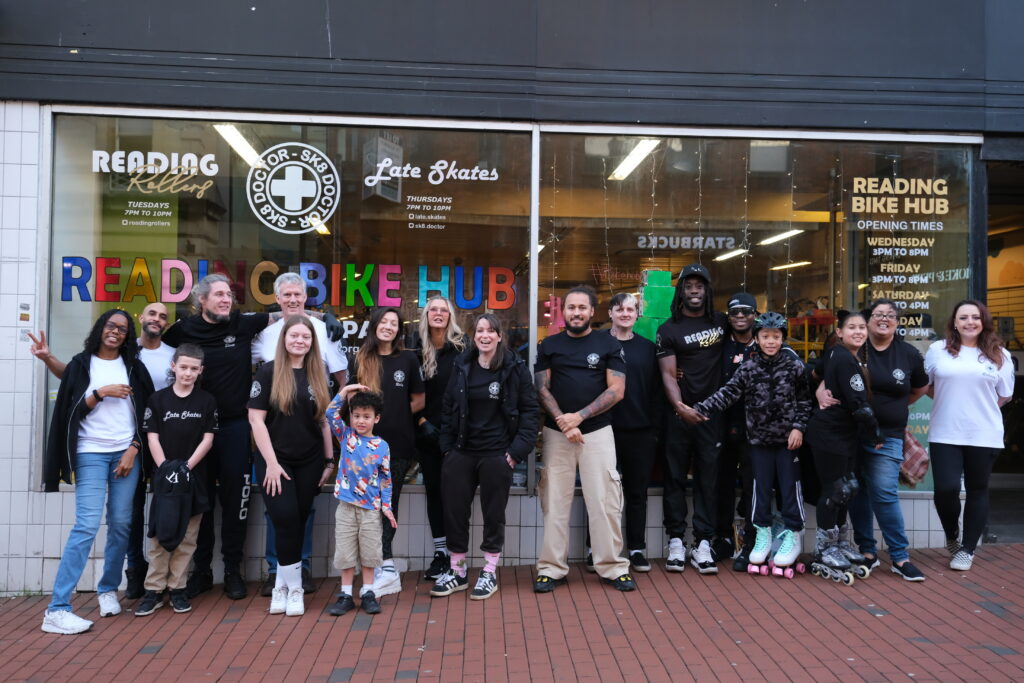
He believes the bike hub will only grow larger and larger, as different groups work together to support one another, exploring a wider world, a world with more possibility, like how Late Skates and Skate Doctor have got their dream home.
He said, “Talking and working together, we can make a better space for all of us. Like an ecosystem.”
By Nathalie Chi