


















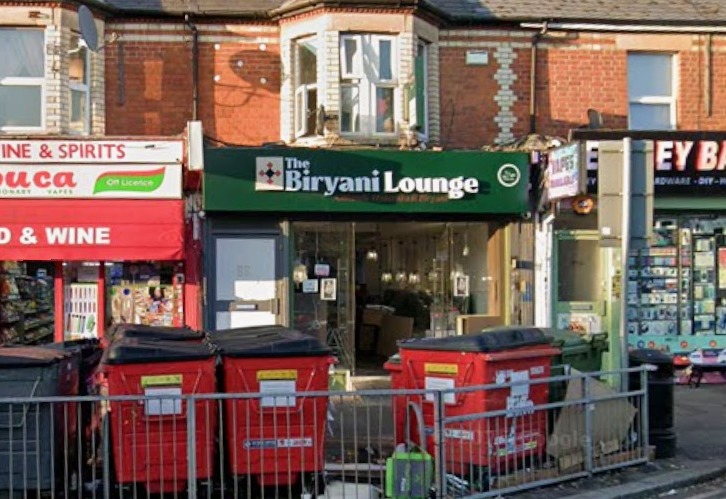
The manager of an Indian restaurant in Reading is ‘relieved and grateful’ to reopen and welcome customers after being forced to close temporarily.
The Biryani Lounge in Wokingham Road, East Reading, was temporarily closed on Friday, January 9.
The team at the restaurant were forced to shut it following an inspection where Reading Borough Council hygiene officers found evidence of a rat infestation.
The council can order a business to close if it is judged to present a public health risk by serving a Hygiene Emergency Prohibition Notice (HEPN).
The closure must then be confirmed using a Hygiene Emergency Prohibition (HEPO), which must be secured at a Magistrates Court hearing.
But The Biryani Lounge has been allowed to reopen after the management team and staff engaged with the council’s hygiene officers, which prompted a successful reinspection.
Bhanuchandar Pathakamuri, one of four friends who opened the restaurant, said: “The council visited our premises and, after a thorough inspection, issued a satisfactory notice allowing us to reopen The Biryani Lounge.
“This followed significant effort from our entire team, including comprehensive sanitisation and deep cleaning of the restaurant.
“It has been a challenging period for us, but we are relieved and grateful to be able to welcome our customers back.”
The follow-up inspection took place yesterday (Thursday, January 15).
The reopening of The Biryani Lounge has been confirmed by the council.
A spokesperson said: “The Food and Safety team served a certificate of satisfaction at the premises yesterday, following a deep clean being undertaken and the rat infestation dealt with.
They were satisfied that the health risk condition longer exists, so Magistrates will no longer be issuing the HEPO.”
A procedural hearing was held at Reading Magistrate’s Court today (Friday, January 16) endorsing the council’s decision to issue the HEPN last week, but a formal HEPO was not issued at that hearing.
The Biryani Lounge was opened in 2022, specialising in biryani and mutton roast and a range of appetisers.
At the time, Mr Pathakamuri, who previously worked at Domino’s, stated that the restaurant offered a menu that would be unique for Reading, and that he previously had to go to Slough to get the same style of food.
During hygiene emergency prohibition hearings, the council’s team must provide evidence for the validity of the HEPN closure and secure a HEPO from magistrates, extending the closure until environmental health officers are satisfied that the imminent risk to health has been removed.
Defendants can also make their case, and may also argue that the HEPN was unjustified.
If the business successfully challenges a council’s application and the court finds that the notice was not justified, the council will be required to compensate the business for any losses suffered due to the closure.