













Springtime is the season of the charity fundraiser. Raising money through a personal challenge like a marathon, or asking passers-by to give spare change, can seem like a weird way to pay for vital public services. Scientific research, healthcare, cultural organisations, community groups and education would soon grind to a halt without charitable donations.
Yet giving provides more than just money to keep services going. It creates meaning, connection, and purpose between communities and individuals.
Our University is an excellent case in point. Without donors from the town of Reading and the wider region, we would never have existed. Young lives would have remained unfulfilled and truths would have remained undiscovered.
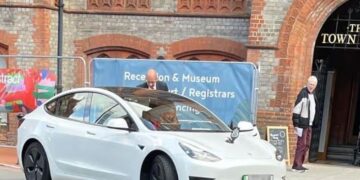
When the University Extension College Reading opened in 1892, it had almost nothing to its name. No land, no buildings, no equipment. Evening lectures were held in the Town Hall. Saturday classes were in a few rooms on Valpy Street. The college existed to serve the people of Reading, and from the very beginning, it was the generosity of local people that made it possible.
A fundraising campaign set out to raise £2,000, equivalent to more than £200,000 today, to help establish the College and expand educational opportunities in the town. George Palmer, of Huntley and Palmer biscuits, provided the first major gift of equipment to fit out those early classrooms. Books arrived to start a library. Prize funds were established to reward outstanding students.
The first donor funded scholarship was established in 1900 by Edith Mary Sutton, of the Sutton Seeds dynasty, a pioneer for whom giving and social action went hand in hand. She chaired the Reading Education Committee, fought for women’s voting rights, later becoming the first female councillor in England and Reading’s first female mayor.
These gifts weren’t acts of distant largesse. They were contributions from neighbours, local businesses, and civic-minded residents investing in something they believed in.
That spirit of generosity shaped everything that followed. Lady Harriet Wantage gave the land, the building and funds for Wantage Hall, our first hall of residence in 1908. A public appeal to local businesses and residents in 1922 helped secure our Royal Charter and University status in 1926.
The University of Reading did not simply arrive fully formed. It was built through the hard work and foresight of this Berkshire community.
Those early donors are no longer here to see it, but 100 years on, their vision lives on. Last April the University held its first Giving Day, bringing together 173 donors whose gifts, large and small, will aid students facing hardship, help local families through the Centre for Autism Wellbeing Hub, and support jobs and ideas for small businesses through the Henley Centre for Entrepreneurship.
Giving opens doors. It changes lives. It keeps world-class research moving forward in ways that benefit us all. And it creates new partnerships, which include donors and recipients working more effectively together to jointly achieve their goals.
This year, as we mark one hundred years since our Royal Charter, the University of Reading Giving Day returns on 29 and 30 April. As our predecessors showed us, every gift, of any size, starts a new page in our continuing story. To find out more, or to make a gift, visit reading.ac.uk/giving.
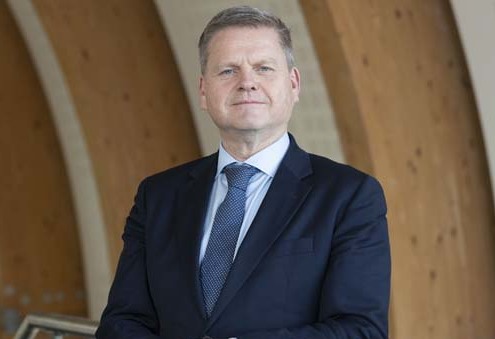
By Professor Robert Van de Noort, Vice Chancellor of the University of Reading