



















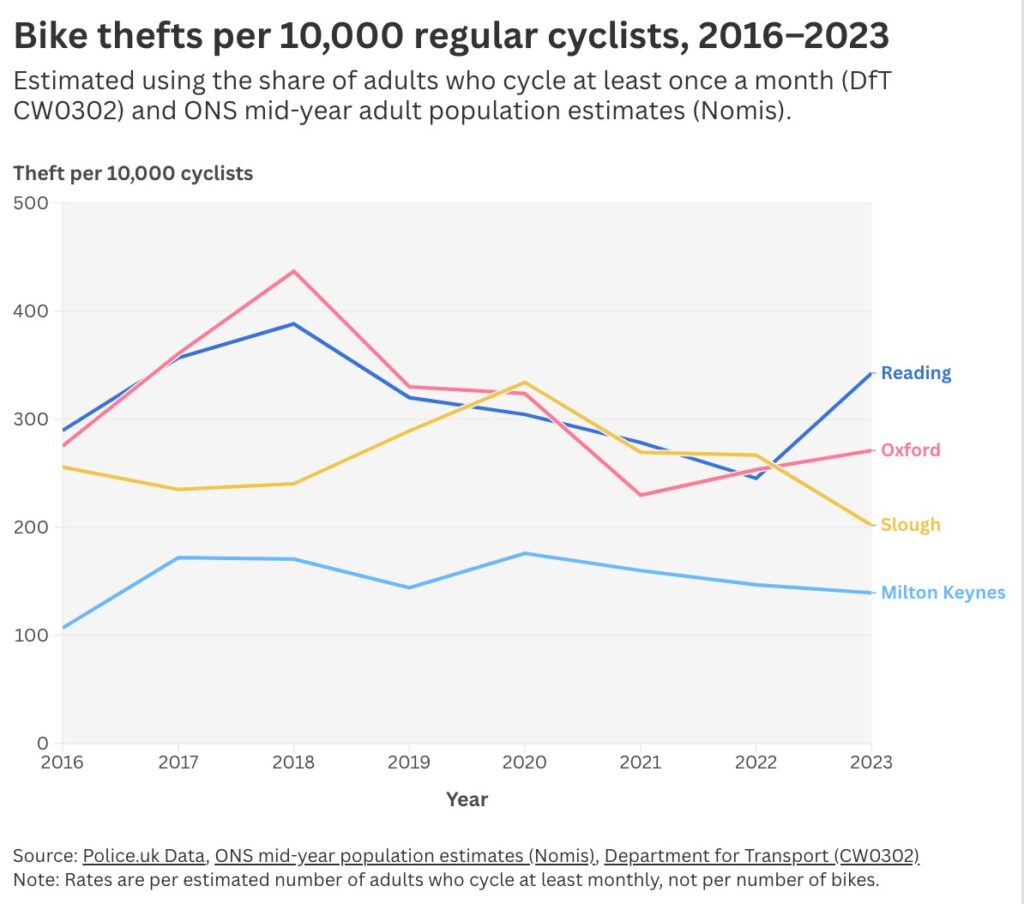
Reading records the highest bike theft rate per cyclist among four nearby towns in the Thames Valley Police force area, with victims losing over £20,000 due to repeated theft.
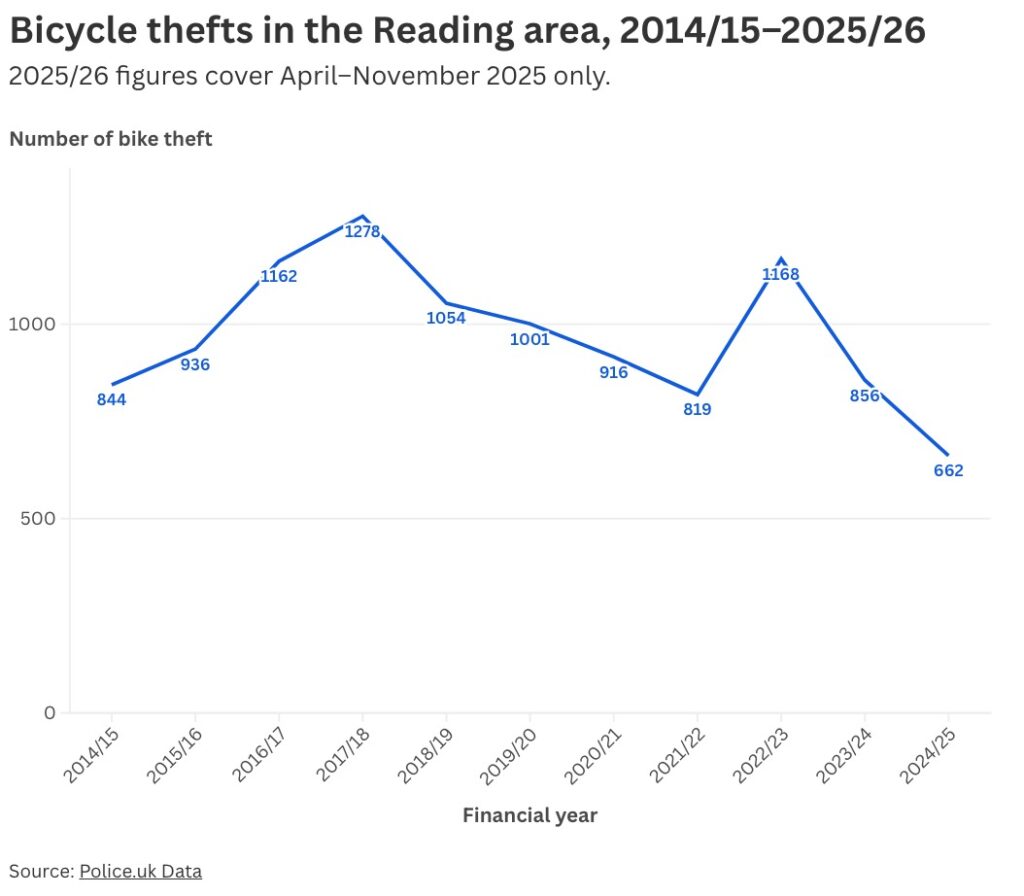
According to data released by Thames Valley Police, the overall number of bike thefts recorded in the Reading area fell from 1,168 incidents in 2022/23 to 662 in 2024/25.
However, recorded bike theft per 10,000 cyclists in the Reading area stood out amongst Slough, Milton Keynes and even Oxford, where a much larger share of residents cycle.
Michael, a Reading resident of more than 40 years, said he has had bikes stolen more than six times.
He estimated his losses at more than £20,000, including the cost of bikes and lost earnings when he could not work.
He used to work in delivery using his bike, yet after it was stolen, he stopped working for two years due to lack of transport and constant visits to the court.
Michael mentioned that it was not possible to claim insurance for every stolen bike as repeated claims might mess up his reputation and make it harder in the future to claim insurance for more serious incidents.
He said: “Bike theft completely messed up my life at the moment, it was an absolute joke.”
Michael was also disappointed as after years of court proceedings and communications with the Thames Valley Police, there was still very little hope for him to get back his bike.
He said: “They are supposed to help me to get justice, but I don’t see any hope.”
Nowadays, he applies triple locks to his bike: two on the bike itself, and one on his waist. He also developed a habit to remind his fellow cyclists to be more aware of protecting their bikes.
He said: “I had to learn it the hard way, so I want to try to alert others to how important it is to protect your own bikes.”
On top of setting up secure parking spaces, Michael also hopes the council could provide more support for cycling infrastructure, while tackling road aggression, in order to achieve its zero-emission goal.
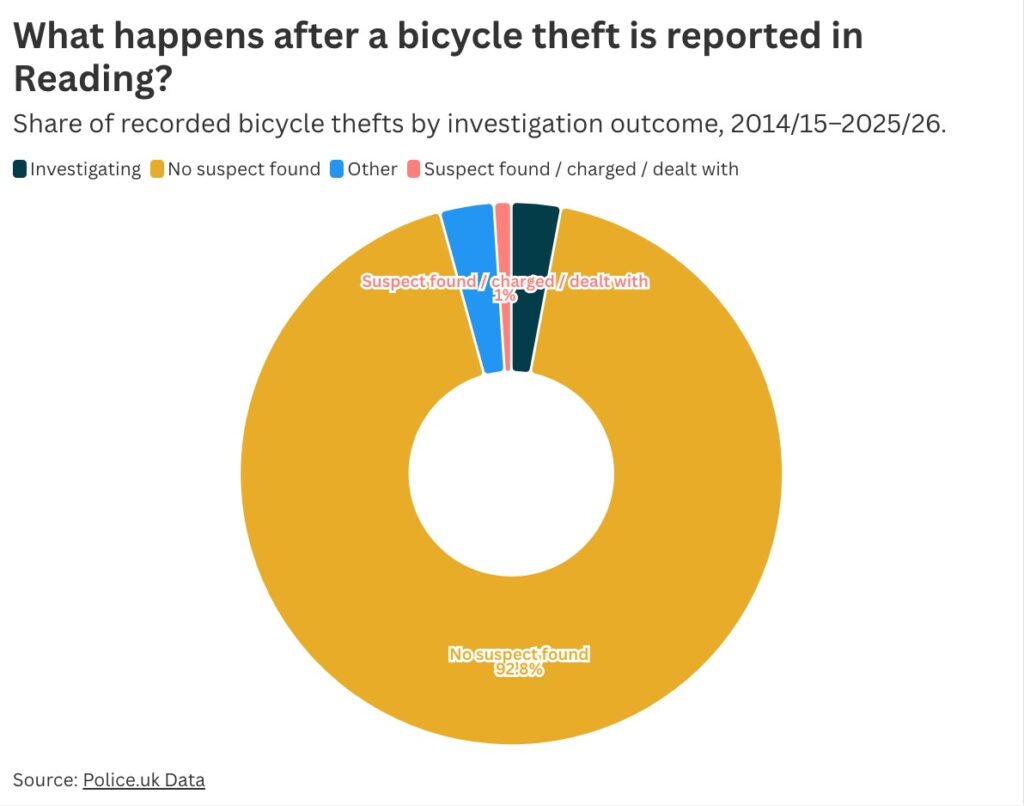
According to data released by the Thames Valley Police, the vast majority of bike theft (92.8%) ended with no suspect identified, while less than 1% had a suspect found, charged or dealt with.
The Reading Cycle Campaign (RCC) ran a recent membership survey to assess the impact of bike theft, which suggested that cyclists are being pushed off their bikes by a “pattern of preventable harm”.
The survey ran between 25 January and 8 February 2026, 25 responses were collected from cyclists across the RG postcode area.
The most frequently reported theft locations were Reading Station and homes (including gardens, sheds and cycle racks), followed by town-centre shopping areas such as Broad Street.
(Click below for details in the interactive map to see exact bike-theft locations.)
RCC says theft is directly reducing cycling levels in the town, where six respondents said they cycled less after a theft and eight stopped cycling temporarily.
The group also highlighted that locking a bike is not a guarantee of safety: 17 respondents said their bike was locked at the time it was stolen.
Ian, a respondent of the survey, also had his bike stolen a few times over the years.
He said: “Cyclists in Reading have to accept the high risk of their bike being stolen if they cycle into town.”
As a person who has been cycling for a long time in his life, his willingness to cycle can still be affected by bike thefts in town.
He said: “I am reluctant to take a bike into town as even when locked there is still a significant risk of theft.”
Ian suggested several solutions that should be introduced by the council, for example, utilising empty spaces like unrented shops as indoor bike hubs, including locked doors, installed CCTVs, and digital passes.
He also suggested that small spaces of existing car parks could be used for parking bikes.
He said: “I am sure cyclists are willing to pay some money for secure dedicated parking spaces.”
Dr Emma Street, Associate Professor of Urban Policy and Governance in Reading University, said that access to secure bike storage would be a great encouragement for people to cycle more.
She stressed that the fear of theft, whether based on personal experience or perception, can discourage people from starting or continuing to cycle.
Street co-authored a 2023 report with the RCC calling for Reading to become an inclusive “Cycle Haven”, where people feel “safe, secure, supported and welcome”.
The report argues that achieving this depends not only on better cycling infrastructure, but on secure parking and storage, including cycle hubs that can offer “peace of mind” for commuters, families and other everyday cyclists by reducing both the risk and the fear of theft.
Street said: “Having secured parking space is something that can be done most easily whilst giving the best result.”
She also advised cyclists to make theft difficult and time-consuming, by using locks with good quality and using them every time, and to lock the frame to a solid, immovable object in a busy, well-lit place.
She also suggested registering and marking bikes, like using Bike Register or Immobilise, and reporting theft promptly to police with a crime reference number.
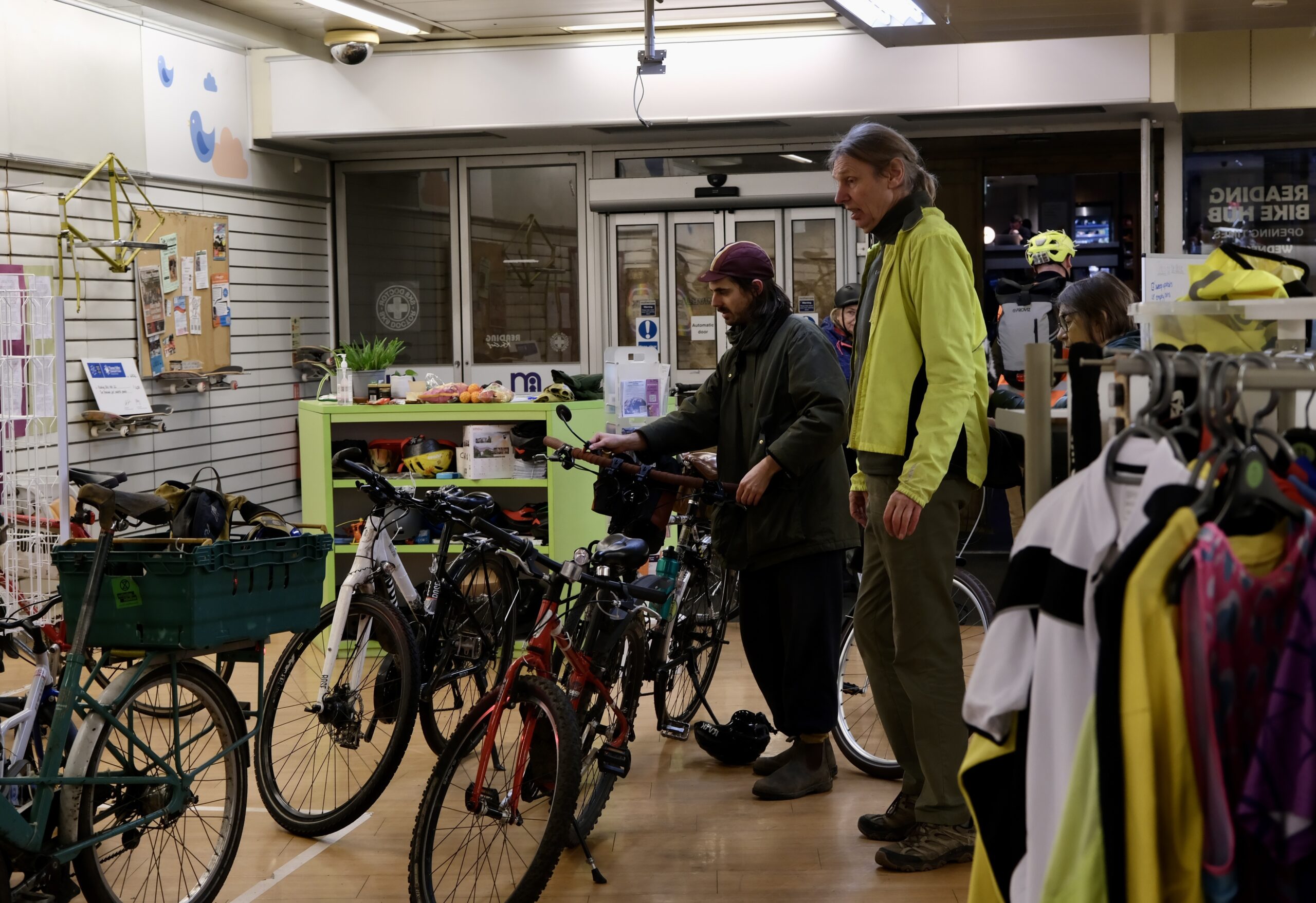
Cyclists looking for indoor parking can also use the Reading Bike Hub in the town centre, next to the Oracle shopping centre.
By Nathalie Chi