


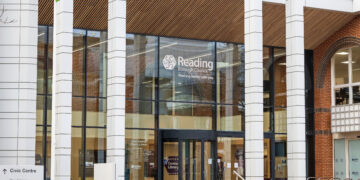












READING Borough Council has proposed further funding into its social care amid increasing costs of the services.
Alongside those in other local authorities, demand for services relied on by vulnerable children, adults and families in Reading continues to rise, as well as the costs of operating them.
Now proposals are being put forward which would see £4.7 million extra for Adult Social Care Services and £3.8 million extra for Children’s Services.
The funding would be intended to cover an increase in the number of service users, in addition to the number of complex care packages and increasing contract inflation in adult social care.
Meanwhile funding for children’s services would aim to address increasing demand on services, increasing complexity of need, a reducing numbers of foster carers, as well as alleviate a shortage of adequate residential placements driving an over-reliance on private sector providers.
It means the combined cost of caring for vulnerable children, young people and adults accounts for more than 70% of the Council’s proposed net service expenditure budget for next year.
It comes in addition to other budget pressures which have existed for several years. These include the increasing cost of providing support and education for pupils with Special Educational Needs and Disabilities (SEND) and providing temporary accommodation for households who would otherwise be homeless.
The council says that its proposed budget for 2026/27 has been balanced through £10.745 million of savings, efficiencies and increased income, and the use of £7.302m earmarked reserves.
It will also mean a Council Tax increase of 4.99% for 2026/27, which includes a 2.00% precept for adult social care. Around 70% of properties in Reading are band C or below, with only 16% of households in band D, making the usual band D comparison less relevant in the town.
The proposed Council Tax increase for a band C household works out as £1.80 per week, excluding police and fire precepts.
The proposed budget will initially go to a meeting of Policy Committee on Monday 16 February, and will then be debated at a meeting of Council on Tuesday, February 24.
Elsewhere in the council’s medium-term financial strategy is aa five-year draft capital programme of investment in better facilities for residents totalling £140.858 million.
It is funded from a combination of successful bids for grants, revenue contributions, external borrowing, developer contributions, infrastructure funding and capital receipts.
It is different from the money the council uses to run day to day services, and cannot be used to balance the Council’s revenue budget.
Councillor Liz Terry, Reading Borough Council Leader, said: “This is the first year in more than a decade where councils have received a multi-year settlement from Government, which is welcome and something we have lobbied for.
“This allows us to better plan for the next three years, rather than the hand-to-mouth approach of previous Governments where one-year settlements were the norm.
“The Government’s Fairer Funding review is also welcome and has resulted in extra funding for Reading over the next three years – the second largest amount in Berkshire.
“You only have to look at the additional money being budgeted for in social care next year however, to see where it will go.”
She explained: “Cost pressures in both children’s and adult social care continue to rise and account for around 70% of all net service expenditure, which leaves the Council with little option but to continue to direct more of its resources into these essential services, and having to find more savings and income to make up the shortfall.
“I don’t think anybody is saying councils should not be caring for vulnerable children and adults.
“These are the fundamentals of what councils do. In basic terms however, the increasing demand for social care and the rising costs of providing those services mean there is less money to pay for the universal services most residents’ use.”
She continued: “A total of 30 local councils received Exceptional Financial Support from Government this year, including three out of the six Berkshire Councils, and an estimated 74 are expected to apply for that same support in the financial year to come.
“Reading is not in that position thanks to its financial planning over a number of years, but we also know that the upward trend in costs and the continued use of reserves to balance the budget is unsustainable in the long term.”
The Medium Term Financial Strategy report can be found via: democracy.reading.gov.uk