


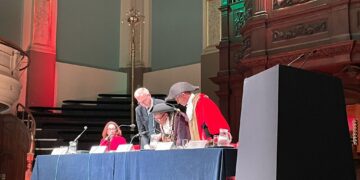

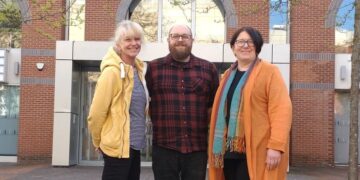















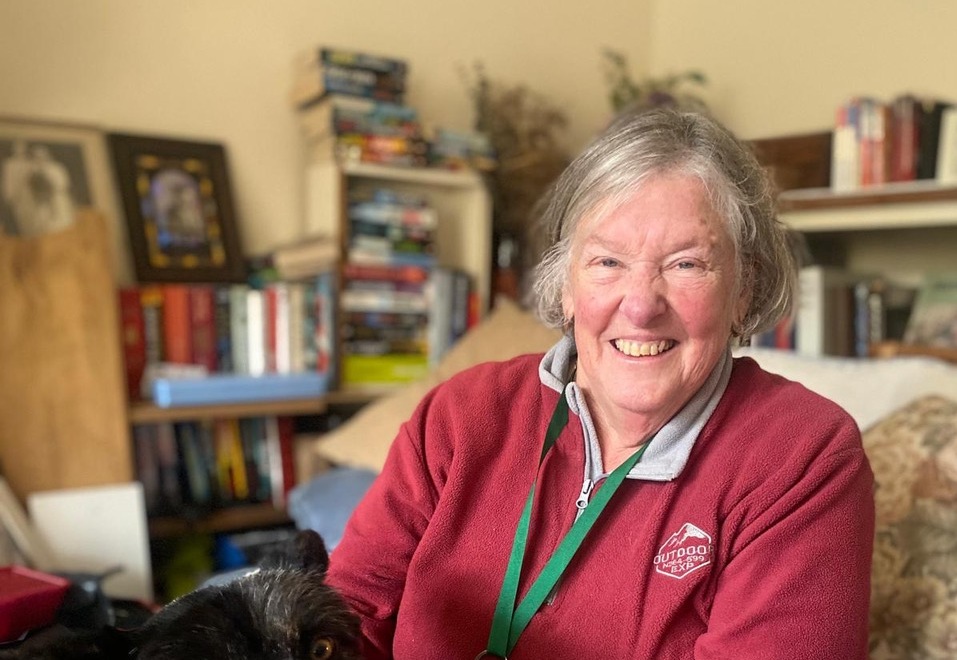
FOLLOWING cast announcement for upcoming RABBLE productions of Glitch: The True Story of the Post Office Scandal, Zannah Kearns caught up with former sub-postmistress Pam Stubbs to talk about her experiences fighting for justice.
How does it feel to see yourself being portrayed on stage?
Not so bad now – it was intimidating at first, but once you get into the production, you forget that it’s ‘you’ if that makes sense. It becomes somebody else’s portrayal of that person.
I liked what the students did first of all [when the script was being developed], because they were so different, then there was the first production – it was so interesting to see how it developed, and every time I see if there’s something new with everyone’s interpretation.
Some people who don’t know a lot about the Post Office scandal might be undecided about whether to come or not. Why should they come?
They should come because this isn’t simply telling the same story as you might have read in the paper, or Nick Wallis’s book, or even the ITV drama.
This play is basically my recollections of what’s happened, my memories of what I went through, how I dealt with it. Basically, being told that I was stealing money.
It’s a deeply personal story, so many people in this village didn’t even know it was going on!
So, it gives this different perspective, people might have seen and heard lots in the news or watched the drama, but Glitch offers a different direction for understanding.
So even if you’re far away from Reading, there will be a postmaster near to you who will have experienced something like this.
So many sub-postmasters were overwhelmed, they ended up giving up. Their lawyers so often encouraged them to plead guilty because they didn’t know how to refute the claims, even though the Post Office were in the wrong – it makes me so angry.
With Barkham being so close to Reading, you’ve a strong connection to Reading–do you have any other connections to venues on the tour?
Chelmsford, yes, as I’m from Essex; Henley as it’s quite close. You’ve been involved with this show since day one.
Now you’re seeing it go out to audiences all across the UK, from Plymouth to Newcastle–how does that feel?
That’s mildly frightening! It’s people who know nothing about here, my local area.
The thought of all of northern England hearing my story is hard to imagine; daunting.
I still think it will resonate and help people understand what happened, because the stress and issues were the same up and down the country — Post Office were as awful wherever you lived!
You grew up in Essex. Whereabouts were you born and brought up, and when did you move away?
I was born in Barking in Essex, brought up there – my whole family’s from round there. My dad worked for Wiggins Teap Paper Makers near St Paul’s Cathedral in London.
We used to go up there quite often. They had a balcony on the seventh floor, and anyone who worked for them could go there for the Lord Mayor’s Show, so we used to go and watch.
I stayed there until I went to college in 1964 when I went to Eastbourne to PE college.
Soon after I left college, my parents moved to Basingstoke; I moved my parents up there, including all my dad’s roses!
The convent school where I taught PE, which you hear about in the play, is in Twickenham.
In what was Alexander Pope’s villa, right on the river. It was a lovely school, and they had literally just build the swimming pool when I began.
That was the best time of my life. I was there for around 18 years.
We have several venues in East Anglia and we wondered if you could tell us about growing up in Essex and any memories you have of that time.
Not really!
My brother lived in Harlow – and every time we visited him, my mum made me drive her through Barking.
I was very happy there; I went to “South East Essex County Technical High School” which could be the longest name for a college ever. They also had a pool, so I swam a lot.
Swimming was the thing I did. I competed, and got as far as national competition in 200m freestyle.
But my sight was very bad and so I struggled to see the other end of the pool!
I may have got into the top 20, but I’d get very nervous so I didn’t keep it up in the end.
I also did a little synchronised swimming as well; it’s so hard!
And then I found I was born to be a teacher, I absolutely loved that.
How would you like people to feel after seeing Glitch?
Angry and frustrated with the powers that be. Not just Post Office–yes, we can all have a go at them – but the solicitors; those who should have given better guidance.
Postmasters were fighting their own battles that they could never win.
I still consider myself very, very lucky that I had a Saturday girl who worked in the portacabin; very intelligent she was, and her father was a high-ranking policeman in Barkham.
His advice was “If they say they’ll prosecute you, just say, see you in court with all your evidence, because they’ll back away – and they did.”
I’m so thankful that I was never actually prosecuted. I do almost feel guilty that I managed to avoid the malicious prosecution that so many others suffered.
All I did was get very cross, say no, and stick to it.
From the time of losing my business until very recently, when I finally got compensation, I had to live from charity shops, I had so little materially because I sold my business for far less than its true value in the end, but I managed; it was a case of ‘needs must’.
It’s very clear that you and the other post masters and mistresses formed a very special bond, how is that bond today?
It’s difficult because I don’t see others very often any more, only if there’s a reason to bring us all together.
Alan obviously got his knighthood–and others received honours, of course, but I haven’t kept up with people particularly, to be honest, as we’re all geographically spread out.
I watched all of the Public Inquiry, I had it on constantly. I cried a lot as I watched people sharing their impact statements; I have such a lot of sympathy for people who suffered far more than I ever did.
And then there were the ones that really make me angry – the Union reps and the private investigators who did so much to ruin people lives.
There are some sub-postmasters I care about very much, Jan Skinner especially, we all supported each other at the time, and Kay Linnell was so helpful during the litigation, she would explain everything to me.
Some people might feel – after Mr Bates – that they know everything there is to know about the scandal.
What would you say to them to encourage them to see Glitch?
No, I don’t think anyone knows everything about the scandal!
I think watching Glitch will help people begin to understand how people caught up in this actually felt: what did they lose from their lives?
With the play you get to witness someone going through the experience as if it’s happening right in front of you… although, of course, there were so many other moments of stress and frustration that could have gone into the play!